Pentagon Reinforces Middle East Presence with Tripoli Amphibious Ready Group Amid Escalating Conflict with Iran
The United States Department of Defense has officially authorized a significant surge of naval and marine forces to the Middle East, marking a major escalation in the American military commitment to the ongoing conflict with Iran. U.S. Defense Secretary Pete Hegseth reportedly approved a formal request from U.S. Central Command (CENTCOM) to deploy an Amphibious Ready Group (ARG) and an attached Marine Expeditionary Unit (MEU) to the region. This strategic move, first reported by the Wall Street Journal, is designed to bolster American offensive capabilities and provide a robust deterrent against continued regional attacks orchestrated by Tehran and its various proxies.
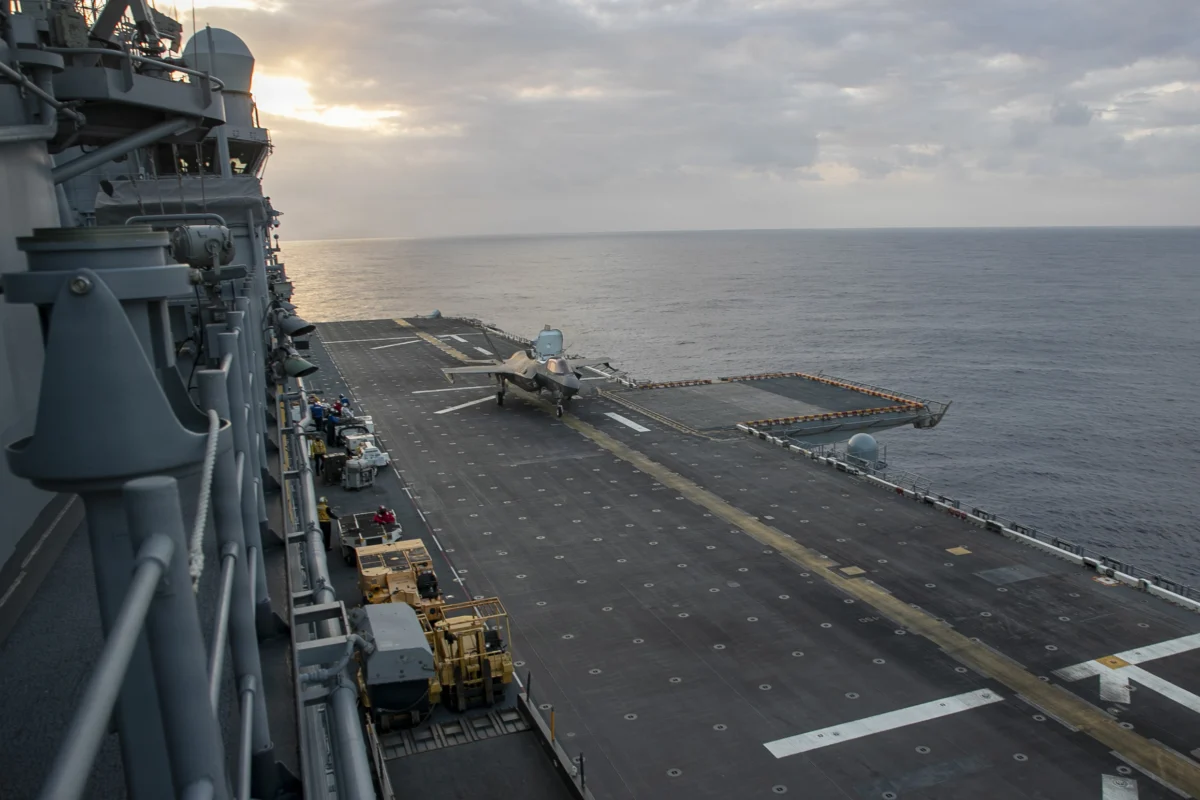
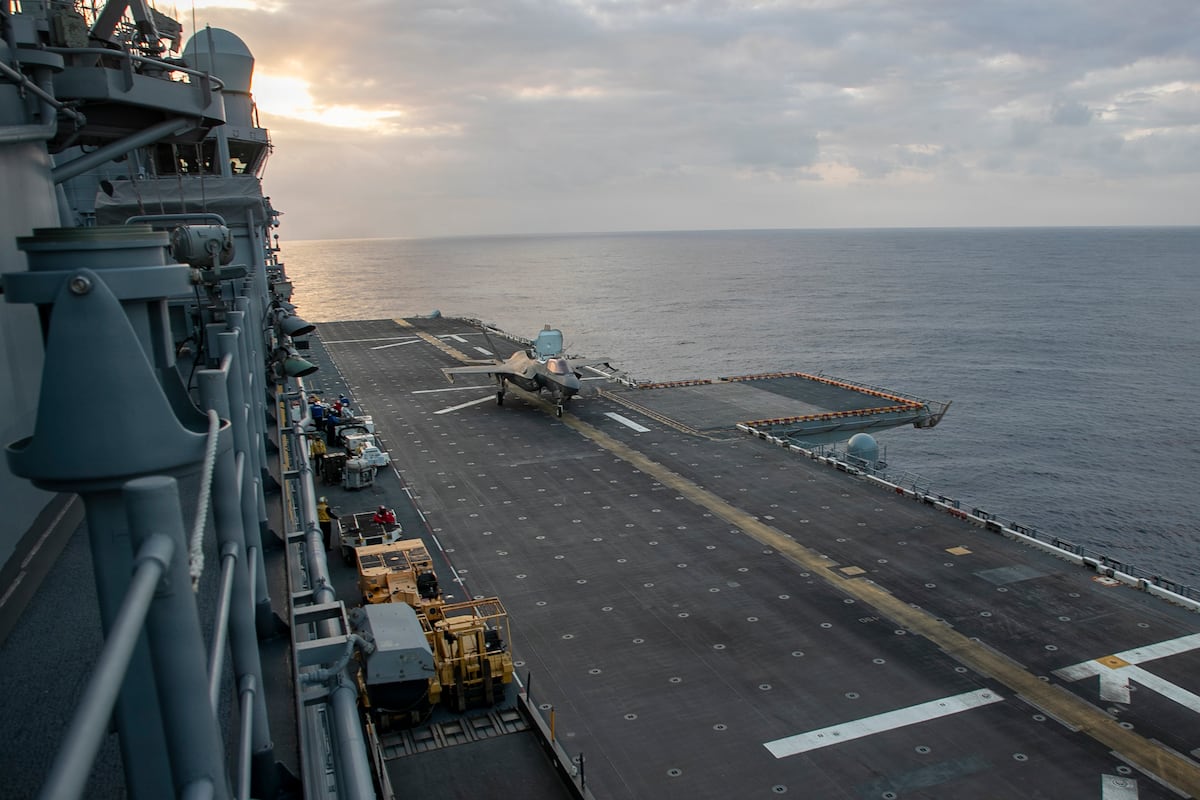
The deployment involves approximately 5,000 personnel and a flotilla of high-readiness warships, centered around the USS Tripoli (LHA-7). The Tripoli, an America-class amphibious assault ship, is currently transitioning from its homeport in Sasebo, Japan, to the Central Command area of responsibility. This shift in assets highlights the Pentagon’s willingness to reallocate resources from the Indo-Pacific theater to address the immediate and intensifying demands of the conflict in the Middle East, a move that analysts suggest reflects the severity of the current security crisis.
Composition of the Tripoli Amphibious Ready Group
The Tripoli Amphibious Ready Group represents a formidable concentration of amphibious warfare capability. In addition to the USS Tripoli, the group includes two San Antonio-class amphibious transport dock ships: the USS New Orleans (LPD-18) and the USS San Diego (LPD-22). These vessels are designed to transport and land elements of a Marine landing force, providing the versatility required for both over-the-horizon assaults and humanitarian assistance if necessary.
Embarked within this naval group is the 31st Marine Expeditionary Unit (MEU), the Marine Corps’ only forward-deployed MEU. The 31st MEU is a Marine Air-Ground Task Force (MAGTF) structured to provide a quick-reaction force capable of conducting a wide range of military operations. Its internal structure is divided into four primary elements:
Ground Combat Element (GCE)
The GCE is built around a Battalion Landing Team (BLT), which includes an infantry battalion reinforced with combat support elements. This component consists of approximately 1,100 Marines and sailors, equipped for direct action, reconnaissance, and security operations. The inclusion of heavy weapons, mortar teams, and anti-armor units ensures the BLT can engage conventional and irregular forces effectively.
Aviation Combat Element (ACE)
The ACE provides the ARG with its "teeth" from the air. It features a composite squadron of tiltrotor aircraft (MV-22B Ospreys) for rapid troop transport, fixed-wing strike aircraft (F-35B Lightning II) for precision bombing and air superiority, and a mix of transport and attack helicopters (CH-53K King Stallions and AH-1Z Vipers). Additionally, the ACE includes ground support assets and integrated air defense teams to protect the fleet and landed forces from aerial threats.
Logistics Combat Element (LCE)
Sustaining a high-intensity combat force in austere environments is the responsibility of the Combat Logistics Battalion. This element is equipped to sustain the entire MEU for up to 15 days without external resupply. It includes specialized personnel in medical services, supply chain management, and explosive ordnance disposal (EOD), ensuring the MEU remains self-sufficient during the initial phases of a deployment.
Command Element (CE)
The CE provides the leadership and communication infrastructure necessary to coordinate complex multi-domain operations. This includes intelligence, surveillance, and reconnaissance (ISR) capabilities that are vital for navigating the complex electronic warfare environment currently present in the Persian Gulf and surrounding waters.
Operation Epic Fury: The First Two Weeks
The deployment comes amid the backdrop of "Operation Epic Fury," the codename for the U.S.-led military campaign against Iranian military infrastructure. According to a statement released by CENTCOM on Thursday, American forces have maintained a blistering operational tempo since the commencement of hostilities. In just under 14 days, U.S. assets have reportedly struck roughly 6,000 targets inside Iranian territory.
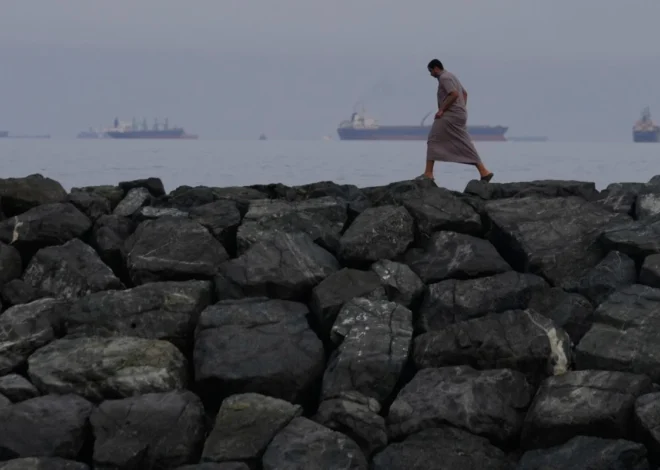
The primary focus of these strikes has been the neutralization of Iran’s maritime and denial-of-access capabilities. CENTCOM confirmed that more than 60 Iranian naval vessels and over 30 minelaying platforms have been eliminated. These operations are intended to ensure the freedom of navigation through the Strait of Hormuz, a critical chokepoint for global energy supplies that Iran has frequently threatened to close.
However, the rapid escalation has come at a significant cost, both in terms of finances and human lives. Pentagon officials recently provided a classified briefing to members of the Senate, revealing that the first six days of Operation Epic Fury cost American taxpayers an estimated $11.3 billion. This figure covers the expenditure of precision-guided munitions, fuel, and operational maintenance but notably excludes long-term costs such as veteran benefits, equipment replacement, and broader economic disruptions. Observers expect the final bill for the first month of the war to exceed initial projections significantly.
Recent Casualties and the KC-135 Incident
The human toll of the conflict was starkly highlighted on Thursday when the U.S. military suffered its single deadliest day of the campaign thus far. A U.S. Air Force KC-135 Stratotanker refueling aircraft crashed during active combat operations. CENTCOM confirmed on Friday that all six crew members aboard the aircraft were killed.
While initial reports fueled speculation regarding enemy involvement, military officials clarified that the crash was not caused by hostile fire or "friendly fire" incidents. A second aircraft was involved in the mission but managed to land safely at a regional airbase. An investigation into the mechanical or environmental factors that led to the tragedy is currently underway.
The deaths of the KC-135 crew nearly doubled the total U.S. fatality count for the war. To date, 13 U.S. service members have been killed in action or during combat-related operations. Furthermore, approximately 140 troops have been wounded, with eight classified as being in "severe" condition. The increasing casualty rate has sparked a renewed debate in Washington regarding the duration and ultimate objectives of the military intervention.
Historical Context: Readiness and Strategic Strain
The decision to deploy the Tripoli ARG from Japan underscores a persistent challenge for the U.S. Navy: amphibious readiness. Less than a year ago, reports indicated that the readiness rate for the Navy’s amphibious assault ships had plummeted to just 41%. This decline was attributed to a combination of aging hulls, maintenance backlogs, and a shift in mission priorities during the Trump administration, which focused heavily on deploying amphibious assets to combat drug cartels in Latin America and the Caribbean.
That focus on the Southern Command (SOUTHCOM) area of responsibility created a five-month gap in MEU deployments elsewhere, leaving a vacuum in the Indo-Pacific and the Middle East. The current emergency deployment of the USS Tripoli suggests that while the Navy is attempting to recover its readiness, the sudden demand of a full-scale regional war is stretching the fleet to its limits.
By pulling the 31st MEU from Sasebo, the U.S. is temporarily reducing its immediate "force-in-readiness" in the East China Sea. This move is being closely watched by regional actors, including China and North Korea, who may view the diversion of American naval power as a window of opportunity.
Strategic Implications and Future Outlook
The arrival of the Tripoli ARG in the Middle East will provide CENTCOM with a flexible "sea base" from which to launch specialized operations. Unlike land-based aircraft, which require the permission of host nations for sorties, the F-35Bs and Ospreys launched from the Tripoli can operate with greater political autonomy. This is particularly relevant as some regional allies have expressed hesitance about their soil being used for direct strikes against Iran.
Military analysts suggest that the next phase of Operation Epic Fury may involve more targeted ground raids or the seizure of Iranian-held islands in the Persian Gulf to prevent the deployment of anti-ship missiles. The presence of the 31st MEU’s ground combat element provides the Pentagon with the specific tools needed for such amphibious maneuvers.
As the conflict enters its third week, the international community remains on high alert. The deployment of 5,000 additional personnel signals that the United States is preparing for a sustained engagement rather than a short-term punitive strike. With costs mounting and the casualty list growing, the pressure is on Secretary Hegseth and the Pentagon to demonstrate that the deployment of the Tripoli ARG will lead to a decisive shift in the theater of operations.
The Department of Defense has not yet provided a specific timeline for how long the Tripoli ARG will remain in the Middle East. However, given the current intensity of Operation Epic Fury, it is expected that these forces will remain on station for the foreseeable future, serving as the vanguard of American military power in a region increasingly defined by open kinetic conflict.

Related Posts
Ukraine Launches Global Combat Data Initiative to Accelerate Artificial Intelligence Development for Autonomous Warfare Systems
Arctic Nations Test FPV Drones in NATO’s Cold Response 2026 Exercise