
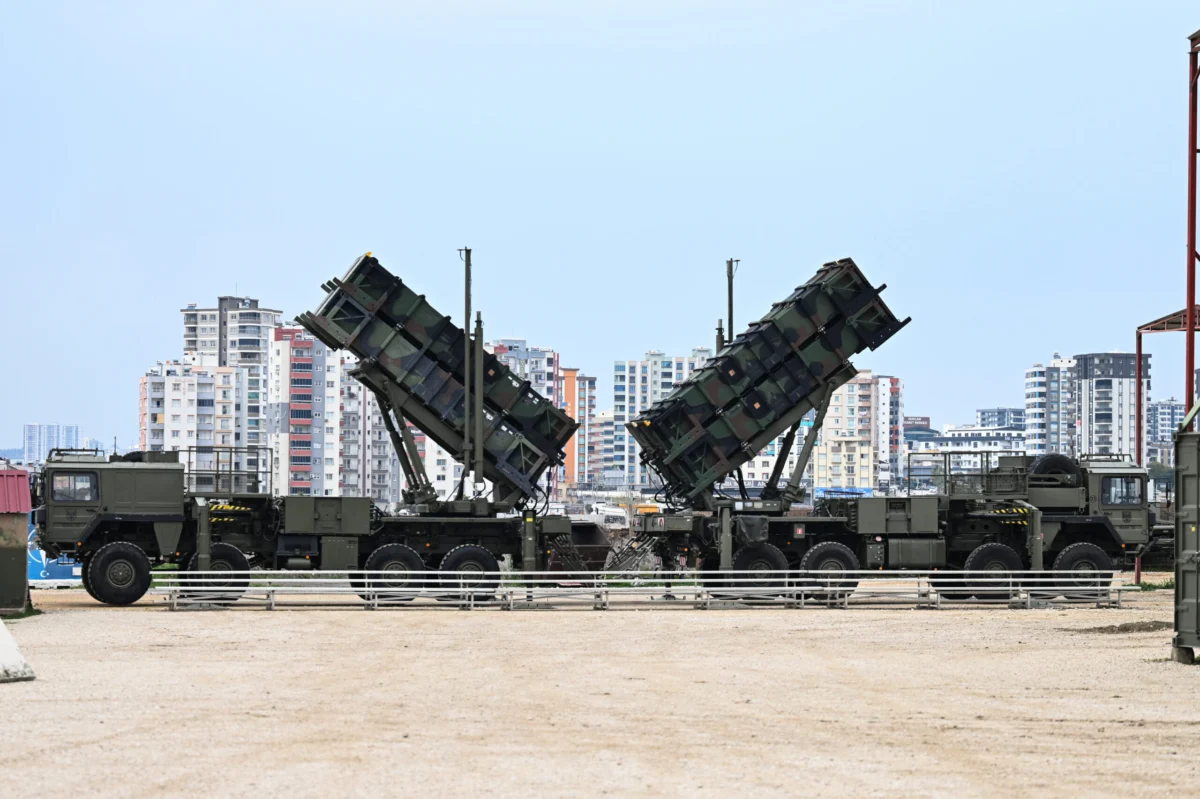
NATO Bolsters Turkish Air Defenses with Patriot Deployment in Malatya Following Iranian Missile Strikes
The Turkish Ministry of National Defense has confirmed the strategic relocation and activation of a Patriot surface-to-air missile battery in the eastern province of Malatya. This deployment comes as a direct response to a significant escalation in regional hostilities, characterized by a series of Iranian missile and drone swarms targeting critical military infrastructure across the Middle East. The move signifies a tightening of the North Atlantic Treaty Organization’s (NATO) eastern flank and underscores the increasing vulnerability of high-value assets to long-range ballistic threats.
In an official communiqué released this week, the Turkish government detailed the necessity of the deployment within the framework of collective defense. “In addition to the robust national measures we have implemented to secure our borders, NATO has enhanced air and missile defense measures across the region,” the statement read. “As part of this coordinated framework, a Patriot System is currently stationed in Malatya and is being prepared for immediate operational readiness to support the protection of our sovereign airspace and the integrity of the alliance’s Integrated Air and Missile Defense (IAMD) architecture.”
The deployment follows several days of heightened kinetic activity in the region, particularly involving the United States and Israel in what has been termed Operation Epic Fury. According to defense officials, the decision to bolster Malatya’s defenses was catalyzed by the successful interception of two Iranian-origin ballistic missiles by NATO forces within Turkish airspace earlier this month. These interceptions served as a stark reminder of the potential for collateral damage or intentional targeting of Turkish soil during broader regional conflagrations.
The Strategic Significance of Malatya and Kürecik
The selection of Malatya as the site for the second Patriot battery is not incidental. The province is home to the Kürecik radar station, a facility of paramount importance to NATO’s Ballistic Missile Defense (BMD) capabilities. Established in 2011 following a pivotal agreement between Ankara and Washington, the Kürecik base hosts an AN/TPY-2 (Army Navy/Transportable Radar Surveillance and Control) X-band radar.
The AN/TPY-2 is a high-resolution, mobile radar system specifically designed to detect, track, and discriminate ballistic missiles in their various phases of flight. Because of its geographic proximity to Iran, the Kürecik sensor provides the NATO IAMD system with critical early warning data. It is capable of tracking missiles launched from deep within Iranian territory during their boost and midcourse phases, relaying that data to interceptors stationed elsewhere, such as Aegis-equipped destroyers in the Mediterranean or Patriot and THAAD (Terminal High Altitude Area Defense) batteries across the Levant and the Persian Gulf.
By placing a Patriot battery in the immediate vicinity of the Kürecik radar, NATO is effectively "defending the defender." The Patriot system provides a localized terminal defense shield for the radar itself, which has become a primary target for Iranian forces. Recent reports indicate that forward-based missile defense radar systems in Jordan, Saudi Arabia, and the United Arab Emirates were specifically targeted by Iranian precision-guided munitions and loitering drones during the opening salvos of Operation Epic Fury. Protecting the Kürecik sensor is therefore vital for the continued functionality of the entire European Phased Adaptive Approach (EPAA) to missile defense.
Logistics and the Ramstein Connection
The newly arrived hardware represents a surge in NATO’s commitment to Turkey. While Spain has maintained a single Patriot battery at İncirlik Air Base near Adana since 2015—as part of the long-standing "Operation Active Fence"—this second system originates from NATO’s Allied Air Command in Ramstein, Germany.
Evidence of the system’s arrival surfaced when local media in Malatya captured footage of the military convoy in transit. The video, which circulated widely on social media platforms, showed an Oshkosh HEMTT (Heavy Expanded Mobility Tactical Truck) A4 M983A4 tractor towing a Patriot launcher trailer. The M983A4 is the standard workhorse for Patriot logistics, providing the necessary power and off-road capability to move the heavy missile canisters and radar units into optimal firing positions.
The logistics of moving a Patriot battery from Germany to eastern Turkey involve a complex coordination of airlift and ground transport. Defense analysts suggest that the speed of this deployment reflects a pre-planned contingency triggered by the Iranian strikes. The "plug-and-play" nature of NATO’s IAMD allows units from different member nations to integrate seamlessly into a unified command and control structure, ensuring that the sensor data from the Kürecik radar can be utilized by the newly arrived launchers with minimal delay.
Timeline of Escalation: Operation Epic Fury
The deployment in Malatya is the latest chapter in a rapidly evolving security timeline. The regional situation deteriorated sharply following the commencement of Operation Epic Fury, a joint U.S.-Israeli initiative aimed at neutralizing drone manufacturing hubs and missile silos within the region.
- Initial Salvos: During the first week of the operation, Iran launched a multi-axis attack using a combination of Shahed-series loitering munitions and Fattah hypersonic missiles. These strikes targeted Allied radar installations in the UAE, Jordan, and Saudi Arabia, attempting to "blind" the regional defense network.
- The Turkish Incursions: Shortly after the regional strikes began, two ballistic missiles launched from western Iran entered Turkish airspace. While their intended targets remain a matter of intelligence debate, NATO’s regional command authorized an immediate engagement. Both missiles were successfully intercepted—one by an Aegis-class vessel in the eastern Mediterranean and another by land-based assets.
- NATO Activation: Following these incursions, Ankara formally requested a reinforcement of the NATO air defense mission. On February 18, 2025, the decision was finalized to move assets from Ramstein to Malatya.
- Arrival and Setup: On February 19, 2025, the first components of the Patriot system were sighted on the roads of Malatya, heading toward the Kürecik perimeter.
Technical Capabilities of the Patriot System
The Patriot (Phased Array Tracking Radar to Intercept on Target) system is a modular, mobile air defense platform that has undergone significant upgrades since its inception. While the specific variant deployed to Malatya has not been officially disclosed for security reasons, it is widely believed to be the PAC-3 (Patriot Advanced Capability-3) MSE (Missile Segment Enhancement).
The PAC-3 MSE is specifically optimized for Ballistic Missile Defense. Unlike earlier versions that relied on proximity-fuse fragmentation to destroy targets, the PAC-3 utilizes "hit-to-kill" technology. This involves a kinetic kill vehicle that physically collides with the incoming warhead at high velocity, ensuring the total destruction of the threat, including chemical or biological payloads, through sheer kinetic energy.
Each Patriot battery consists of several key components:
- The Radar Set: An AN/MPQ-65 radar capable of detecting stealthy targets and managing multiple engagements simultaneously.
- The Engagement Control Station (ECS): The "brain" of the battery, where operators monitor the air picture and authorize launches.
- Launching Stations: Mobile trailers that can carry up to 16 PAC-3 missiles.
- Power Plant and Antenna Mast Group: Providing the necessary electricity and high-bandwidth communications for the system.
In the context of Malatya, the Patriot’s ability to intercept short-to-medium-range ballistic missiles (SRBMs and MRBMs) provides a crucial layer of defense against Iran’s diverse missile arsenal, which includes the Qiam and Shahab families of missiles.
Geopolitical Implications and Official Reactions
The deployment has elicited a range of responses from regional stakeholders. For Turkey, the move is a delicate balancing act. While Ankara has sought to maintain a functional diplomatic relationship with Tehran, the direct threat posed by Iranian missile trajectories has forced a prioritization of its NATO obligations.
A spokesperson for the Turkish Ministry of Foreign Affairs emphasized that the deployment is "purely defensive in nature" and is intended to "deter any further violations of Turkish sovereignty." However, the presence of NATO hardware near the Iranian border is likely to be viewed with suspicion by Tehran. Iranian state media has previously criticized the Kürecik radar, labeling it a tool for Israeli defense, a claim that Ankara has repeatedly denied, asserting that the data is strictly for NATO use.
In Brussels, NATO Secretary General Jens Stoltenberg (or his successor in the 2025 timeframe) reaffirmed the alliance’s commitment to Turkey. "The deployment of Patriot missiles to Malatya demonstrates NATO’s resolve to defend every inch of Allied territory. Our Integrated Air and Missile Defense system is a cornerstone of our collective security, and we stand in full solidarity with our Ally, Turkey, in the face of regional instability."
From a broader perspective, the activation of the Malatya battery signals a shift in the regional "missile war." By reinforcing its eastern border, Turkey is effectively creating a buffer zone that complicates Iran’s strategic calculus. Any missile strike traversing or targeting eastern Turkey now faces a high probability of interception, reducing the leverage Iran holds through its missile diplomacy.
Conclusion and Future Outlook
As the Patriot system in Malatya reaches full operational readiness, the regional security landscape remains volatile. The deployment serves as a stop-gap measure while Turkey continues to develop its own indigenous long-range air defense systems, such as the SİPER project. However, until those national systems are fully mature and integrated, the reliance on NATO assets remains a critical component of Turkey’s national security strategy.
The presence of Spanish forces at İncirlik and the new NATO deployment at Malatya create a dual-axis defense for Turkey’s southern and eastern borders. As Operation Epic Fury continues to reshape the geopolitical realities of the Middle East, the Malatya Patriot battery stands as a silent sentinel, protecting a vital node in the global defense network and ensuring that the "eyes" of NATO—the Kürecik radar—remain open and operational amidst the chaos of regional conflict.
The coming weeks will be telling. Should Iranian attacks persist, there may be calls for further reinforcements, including the deployment of additional THAAD batteries or the permanent stationing of more NATO air defense units in the region. For now, the focus remains on stabilization, deterrence, and the vigilant protection of the skies over Malatya.

Related Posts
Four Airmen Confirmed Dead and Two Missing Following KC-135 Stratotanker Crash During Combat Operations in Western Iraq

Hungary’s Political Landscape Erupts Amidst Claims of Ukrainian Interference and Russian Disinformation Ahead of Pivotal Elections
