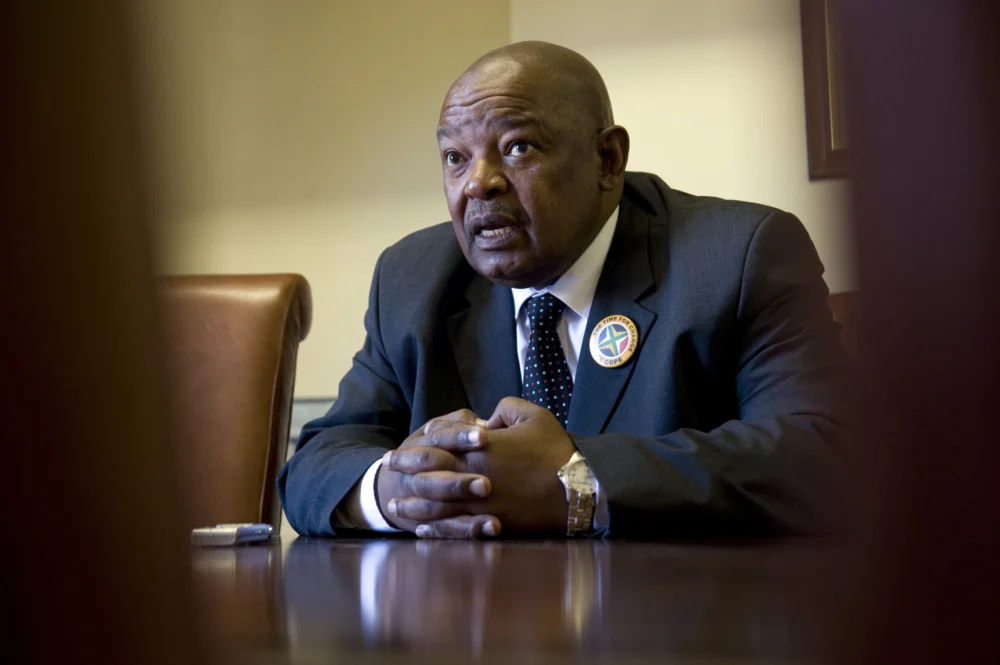
Mosiuoa "Terror" Lekota, A Steadfast Advocate for Democracy and Non-Racialism, Passes Away at 77
South Africa has lost a pivotal figure in its struggle for liberation and a dedicated public servant with the passing of Mosiuoa "Terror" Lekota, a co-founder of the Congress of the People (Cope) and a veteran anti-apartheid activist. Lekota died at the age of 77 after a protracted illness, his eldest son and family spokesperson, Kotana Lekota, confirmed. The news has prompted widespread tributes from across the political spectrum, acknowledging Lekota’s profound and multifaceted contributions to the nation’s journey towards democracy.
President Cyril Ramaphosa led the chorus of mourning, describing Lekota as "a patriot, a freedom fighter and a servant of the people whose life story is closely intertwined with our journey of struggle and the realisation of democracy." Ramaphosa highlighted Lekota’s lifelong commitment to liberation, emphasizing his "resilience, courage and steadfast belief in justice." The President particularly lauded Lekota’s "principled dedication to non-racialism," a cornerstone of his political philosophy both during the apartheid era and in a democratic South Africa. The tributes also acknowledged Lekota’s significant service in various capacities, including as premier of the Free State province and as Minister of Defence, underscoring his deep engagement with the country’s governance and security apparatus.
A Life Forged in the Crucible of Resistance
Mosiuoa Lekota’s political journey began in his youth, deeply influenced by the injustices of apartheid. As an active member and organiser for the South African Students’ Organisation (SASO), he became a target of the apartheid regime. His activism led to his prosecution and subsequent imprisonment on Robben Island in 1974. For eight years, Lekota shared the harrowing confines of the notorious prison with other iconic anti-apartheid leaders, including Nelson Mandela, forging bonds and deepening his resolve against the oppressive system. This period of incarceration, a common crucible for many who would later shape a new South Africa, solidified his commitment to the cause of freedom.
Upon his release in 1982, Lekota did not falter. Instead, he re-entered the political arena with renewed vigor, quickly rising to prominence within the United Democratic Front (UDF). The UDF, a formidable non-racial mass movement comprising over 400 grassroots organisations, was instrumental in galvanizing opposition to the National Party government’s controversial tricameral parliament system, which, despite its claims of inclusivity, perpetuated racial segregation and disenfranchisement. Lekota’s active role in the UDF again drew the attention of the apartheid state. In 1988, he was convicted in the protracted Delmas treason trial, facing charges of treason, subversion, and murder. The state attempted to link the UDF’s non-violent resistance strategies to violent uprisings in the Vaal region. Though sentenced to 12 years imprisonment, his conviction, along with those of other trialists, was ultimately overturned in 1989, a testament to the legal challenges against the apartheid regime’s overreach.
Navigating the New Dispensation: From Premier to Defence Minister
Following the unbanning of the African National Congress (ANC) and the dawn of democracy in 1994, Lekota transitioned into the newly formed government. He served as the first premier of the Free State province from 1994 to 1996, a critical period of nation-building and provincial restructuring. His leadership in this capacity laid the groundwork for democratic governance in one of South Africa’s key provinces. Subsequently, Lekota was appointed as the Minister of Defence, a role that placed him at the helm of the nation’s armed forces during a sensitive period of integration and transformation. His tenure in this portfolio was marked by efforts to professionalize the defence force and ensure its alignment with democratic principles.
A Principled Departure and the Founding of Cope
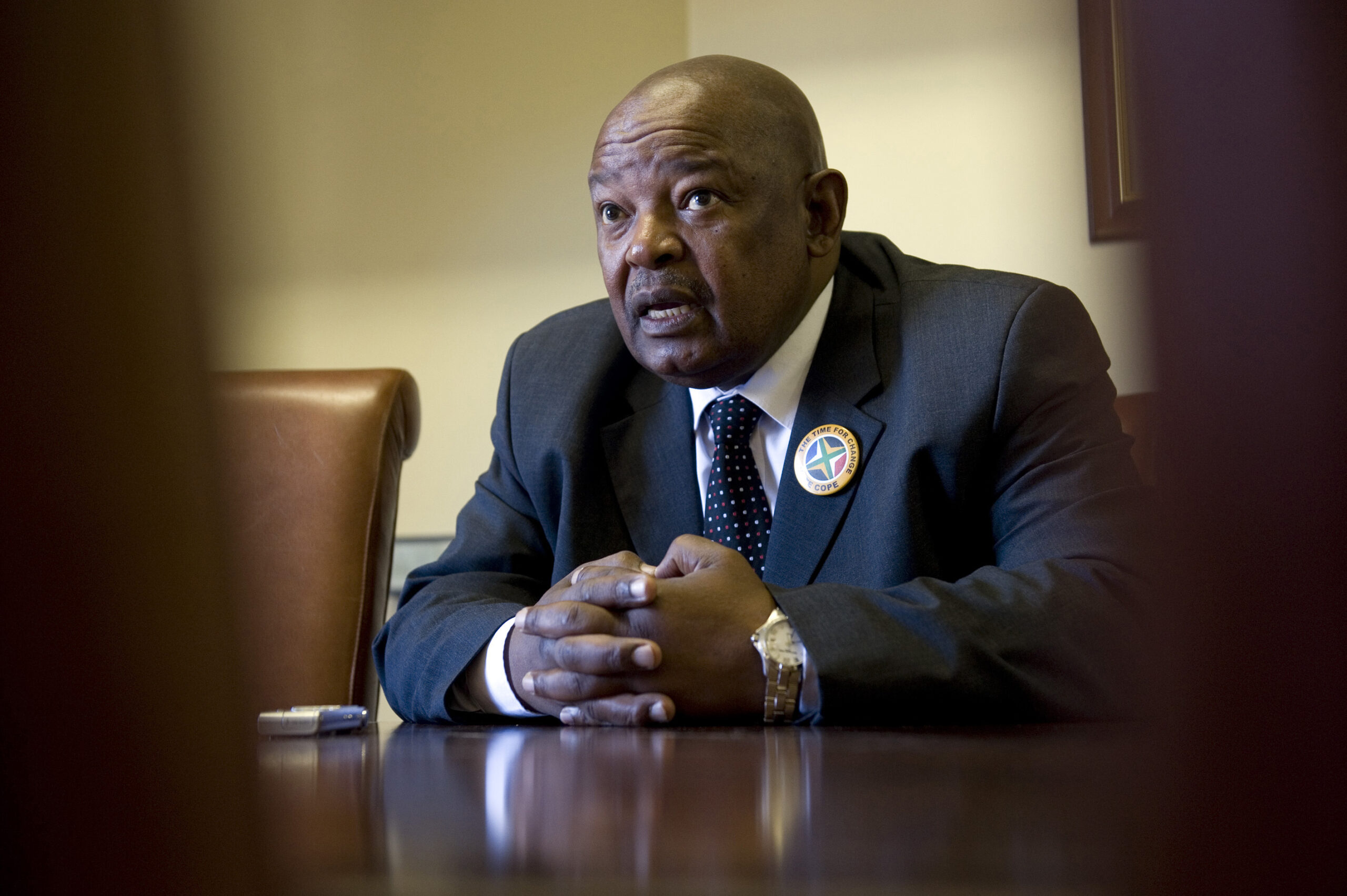
The political landscape of the ANC underwent significant shifts, particularly following the Polokwane conference in December 2007. This watershed moment saw the ousting of then-President Thabo Mbeki, an ally of Lekota, by Jacob Zuma. The internal divisions within the ANC deepened, leading to a significant schism. Lekota, along with other senior ANC leaders, including Mbazima Shilowa, made the momentous decision to break away from the liberation movement. This departure culminated in the formation of the Congress of the People (Cope) in 2008, a new political party aimed at offering an alternative political platform rooted in the principles of the liberation struggle. Lekota played a crucial role in the establishment and early development of Cope, positioning it as a voice for those disillusioned with the direction of the ruling party.
A Legacy of Principle and Accountability
Beyond his prominent political roles, Lekota will be remembered for his unwavering commitment to his principles, even in the face of adversity. Songezo Zibi, leader of RISE Mzansi, noted that while many would recall Lekota for the positions he held, his "principled positions, even in the face of criticism and humiliation," were his most enduring legacy. This sentiment was echoed by the Forum for South Africa, which praised Lekota’s "principled stance in exposing corruption and speaking out against the moral decay that has weakened many of South Africa’s public institutions."
The Forum’s statement highlighted Lekota’s courage in challenging wrongdoing and demanding ethical leadership, asserting that his actions demonstrated a deep commitment to "constitutional democracy and clean governance." In a nation grappling with persistent challenges of corruption, unemployment, crime, and inequality, the Forum emphasized that leaders like Lekota, who consistently raised concerns about accountability, leave behind a legacy that "must not be ignored." His voice, they contended, contributed significantly to the "broader national conversation about restoring integrity in public life."
Broader Context and Implications
Lekota’s passing at a time of significant political and socio-economic flux in South Africa invites reflection on the enduring values he championed. His journey from a young anti-apartheid activist imprisoned on Robben Island to a national minister and party co-founder encapsulates the transformative power of the struggle for democracy. His consistent emphasis on non-racialism, principled leadership, and accountability serves as a crucial reminder of the ideals that underpinned the fight against apartheid and remain vital for the health of contemporary South African democracy.
The formation of Cope, while a significant event in Lekota’s career, also reflects the complex and often fractured nature of post-apartheid politics. His departure from the ANC, driven by fundamental disagreements over governance and ideological direction, underscores the ongoing debates about the soul of the liberation movement and its ability to adapt to the challenges of a democratic state.
The tributes from across the political spectrum, including from President Ramaphosa, indicate a recognition of Lekota’s broad impact, transcending immediate political affiliations. This broad acknowledgment suggests that his commitment to certain core democratic principles resonated beyond partisan divides. As South Africa continues to navigate its path, the lessons drawn from Lekota’s life—his resilience in the face of oppression, his dedication to justice, and his courageous pursuit of ethical governance—offer a valuable framework for understanding the nation’s past and shaping its future. His legacy is not merely that of a political leader, but of a steadfast advocate for a more just and equitable South Africa.

Related Posts
Lagos State Government Issues Urgent Flood Warning as 2026 Rainy Season Forecast Projects Intense Precipitation

Mediterranean Shipping Company signs 45-year agreement with Nigerdock to develop Snake Island Container Terminal