Landmark Court Ruling in Ukraine a Step Toward Equality
In a judicial determination that marks a transformative moment for the Ukrainian legal system, the Supreme Court of Ukraine has formally recognized a same-sex couple as a de facto family, establishing a binding precedent that bridges a long-standing gap between social reality and statutory recognition. The ruling, which concludes a years-long legal struggle by Ukrainian diplomat Zorian Kis and his partner Tymur Levchuk, signifies the first time the nation’s highest court has affirmed that same-sex partnerships constitute a family unit under existing law. This decision arrives at a critical juncture for Ukraine as it balances traditional social structures with the human rights requirements of European Union integration and the evolving domestic attitudes shaped by the ongoing defense against Russian aggression.
The Supreme Court’s decision upheld a prior ruling from a lower court, which had determined that Kis and Levchuk, who have shared a life for over a decade, meet the legal criteria for a family. Under Article 3 of the Family Code of Ukraine, a family is defined by individuals who live together, are connected by common life, and have mutual rights and obligations. While the code has historically been interpreted through a heteronormative lens, the Supreme Court’s validation of the lower court’s findings confirms that gender is not a disqualifying factor in the definition of a "de facto" family union. This ruling provides a vital legal tool for hundreds of thousands of LGBTQ+ Ukrainians, though advocates warn that judicial precedents alone cannot replace the comprehensive protections offered by formal legislation.
The Long Path to Recognition: A Chronology of the Case
The legal journey of Zorian Kis and Tymur Levchuk began long before the 2022 full-scale invasion, rooted in the daily administrative hurdles faced by same-sex couples in Ukraine. For years, the couple sought ways to formalize their relationship to ensure mutual protection in matters of healthcare, property, and inheritance. In the absence of a registered partnership law, they turned to the courts to seek recognition of their "de facto" family status—a status typically used by heterosexual couples who live together without a formal marriage certificate.
In early 2024, a lower court in Kyiv ruled in favor of the couple, acknowledging that their decade-long cohabitation, shared finances, and public presentation as a couple met the requirements of a family unit. The case was subsequently appealed, eventually reaching the Supreme Court. The high court’s refusal to overturn the lower court’s decision effectively cements the ruling, making it a "source of law" that lower courts must consider when hearing similar cases.
This chronology is set against a broader international legal backdrop. In June 2023, the European Court of Human Rights (ECHR) issued a landmark ruling in the case of Maymulakhin and Markiv v. Ukraine. The ECHR found that Ukraine had violated the European Convention on Human Rights by failing to provide any form of legal recognition or protection for same-sex couples. The court explicitly rejected the Ukrainian government’s argument that "traditional values" justified the exclusion of same-sex couples from legal frameworks. The Supreme Court’s recent ruling is seen by many legal analysts as a direct response to these international pressures and a necessary step toward aligning domestic jurisprudence with European standards.
Shifting Public Sentiment and the Impact of the Full-Scale Invasion
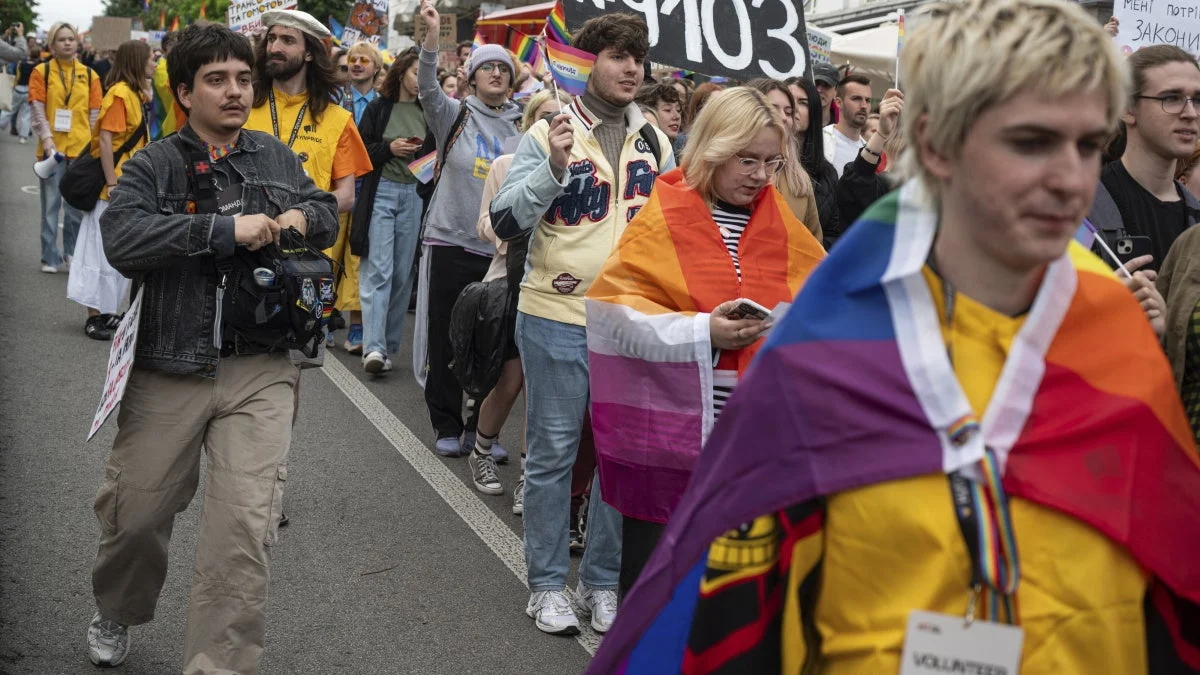
The sociopolitical landscape regarding LGBTQ+ rights in Ukraine has undergone a profound shift since the start of Russia’s full-scale invasion in February 2022. This evolution is driven largely by the visible service of LGBTQ+ soldiers within the Armed Forces of Ukraine. Conservative estimates suggest that thousands of gay, lesbian, and queer individuals are currently serving on the front lines, often wearing "unicorn" patches to signal their identity and their fight for a democratic, inclusive future.
The presence of these soldiers has personalized the issue of equal rights for much of the Ukrainian public. When an LGBTQ+ soldier is wounded or killed in action, their partner currently has no legal standing to make medical decisions, visit them in intensive care, or claim the body for burial. This "legal vacuum" has become a matter of national debate, framed not just as a social issue but as a matter of justice for those defending the state.
Supporting data from the Kyiv International Institute of Sociology (KIIS) illustrates this dramatic shift. In 2016, only a small minority of Ukrainians supported equal rights for same-sex couples. By 2024, surveys indicated that over 70 percent of the population believes that LGBTQ+ citizens should have the same rights as others. Furthermore, support for the introduction of registered civil partnerships—which would grant many of the rights associated with marriage—has risen to nearly 30 percent, with an additional 25 percent expressing neutrality, a significant departure from the active hostility seen a decade ago.
Legislative Stagnation and the Civil Partnership Bill
Despite the Supreme Court’s ruling and the shift in public opinion, the legislative branch remains deadlocked. Bill No. 9103, which would allow both same-sex and different-sex couples to register a civil union, has been stalled in the Verkhovna Rada (Ukraine’s parliament) for over three years. Introduced by MP Inna Sovsun and supported by various human rights organizations, the bill aims to provide a "middle ground" that bypasses the constitutional definition of marriage (which remains defined as a union between a man and a woman) while granting essential rights.
The stalled progress of Bill 9103 is attributed to several factors:
- Religious Opposition: The All-Ukrainian Council of Churches and Religious Organizations has consistently lobbied against the bill, arguing that it undermines the traditional family structure.
- Political Caution: Some lawmakers fear that pushing for LGBTQ+ rights during a time of war could be used by Russian propaganda to paint Ukraine as "morally decayed," despite the irony that Ukraine’s move toward these rights distinguishes it from Russia’s increasingly repressive anti-LGBTQ+ laws.
- Prioritization of War Legislation: The parliament’s agenda is currently dominated by mobilization, defense spending, and martial law regulations, often pushing social reforms to the periphery.
The Supreme Court’s ruling puts fresh pressure on the Rada. By recognizing same-sex couples as de facto families, the judiciary has signaled that the current legislative void is untenable. However, a de facto status is harder to prove and offers fewer automatic protections than a registered partnership, leaving couples to litigate their rights on a case-by-case basis.
Contradictions in the New Draft Civil Code
A significant point of concern for human rights advocates is a new draft of the Civil Code currently under consideration. Registered by the Speaker of the Verkhovna Rada, Ruslan Stefanchuk, the draft aims to modernize Ukraine’s private law. However, critics point out that the draft explicitly defines "de facto family unions" as being between a man and a woman.
If this draft were adopted in its current form, it would directly contradict the Supreme Court’s recent ruling and potentially strip same-sex couples of the judicial recognition they have just gained. Legal experts warn that such a move would place Ukraine in direct violation of its obligations under the European Convention on Human Rights. It could also jeopardize Ukraine’s path toward European Union membership. The European Commission’s 2024 report on Ukraine’s progress highlighted the need for the country to harmonize its anti-discrimination laws and human rights protections with EU standards, which include the legal recognition of same-sex partnerships.
Broader Implications for Human Rights and EU Accession
The Supreme Court’s decision is more than a victory for one couple; it is a litmus test for Ukraine’s democratic credentials. As the country seeks to distance itself from the "Russian World"—a geopolitical concept often characterized by the suppression of minority rights and the enforcement of state-mandated "traditional values"—the protection of LGBTQ+ rights has become a symbol of Ukraine’s European aspirations.
The legal implications of being recognized as a "family" are extensive. In the Ukrainian legal system, family members enjoy:
- Medical Rights: The right to visit a partner in the hospital and make emergency medical decisions.
- Inheritance: Automatic standing in inheritance proceedings in the absence of a will.
- Testimonial Privilege: The right to refuse to testify against a family member in court.
- Social Benefits: Access to state support and survivor benefits, particularly crucial for the families of fallen soldiers.
Without formal legislation like Bill 9103, same-sex couples must still rely on expensive and time-consuming litigation to exercise these rights, even with the Supreme Court precedent in hand. The "de facto" status requires proof of a shared household and joint budget, which can be difficult to establish if one partner is serving at the front or if the couple has been displaced by the war.
Conclusion: A Call for Legislative Action
The Supreme Court of Ukraine has cleared a path, but the journey toward full equality remains incomplete. The ruling that same-sex couples are families is a powerful affirmation of dignity and human rights, yet it highlights the inadequacy of a system that requires citizens to sue for recognition that should be granted by statute.
For the thousands of LGBTQ+ Ukrainians serving in the trenches, the ruling provides a glimmer of hope that their sacrifices are being met with a reciprocal commitment to justice from the state. However, the legal vacuum persists for as long as the Verkhovna Rada delays the passage of civil partnership legislation.
As Ukraine continues its heroic struggle for sovereignty, the world is watching not only its military progress but also its internal transformation. By adopting the civil partnerships bill and ensuring the new Civil Code reflects the Supreme Court’s inclusive precedent, Ukraine can demonstrate that its future is indeed built on the rule of law, the protection of minorities, and the fundamental principle that every citizen deserves the right to have their family recognized and protected. The Supreme Court has spoken; it is now incumbent upon the legislature to ensure that the law of the land finally catches up with the reality of its people.

Related Posts
Israeli Settler Violence and West Bank Land Seizures Accelerate Under the Cover of Regional Conflict
Georgia Faces Critical Human Rights Crisis as OSCE Report Details Systematic Democratic Backsliding and Repression of Dissent