Israel Casts Doubt on Immediate Iranian Regime Collapse Amidst Devastating War, US Insists on Unconditional Surrender
JERUSALEM/DUBAI – In a significant internal assessment that tempers earlier public pronouncements, senior Israeli officials have privately conceded a lack of certainty regarding the collapse of Iran’s clerical government, even as a relentless joint U.S.-Israeli bombing campaign continues to devastate the Islamic Republic. This internal deliberation comes amidst an apparent absence of popular uprising within Iran, despite widespread civilian casualties and destruction. While U.S. President Donald Trump has offered seemingly contradictory statements hinting at an imminent conclusion to the conflict, Israel’s intelligence suggests Washington is far from ordering an end to hostilities, instead pursuing a strategy of "unconditional surrender" from Tehran.
The intense air assault has claimed the life of Supreme Leader Ayatollah Ali Khamenei, along with a number of high-ranking military commanders, fundamentally altering Iran’s leadership landscape. However, the campaign has also resulted in a tragic toll on civilian lives and extensive damage to homes and public infrastructure across major Iranian cities, fueling a complex blend of anger and nationalist sentiment among the populace. Missiles continue to strike targets in Tehran and other urban centers, while Iranian authorities have issued stern warnings of deadly force against any who dare to protest, effectively stifling potential street demonstrations that might otherwise emerge from a deeply discontented population.
The Shifting Sands of War Aims and Strategic Ambiguity
The private acknowledgements from Israeli officials mark a notable recalibration from the initial, more optimistic expectations for regime change. A senior Israeli official, speaking on condition of anonymity due to the sensitivity of ongoing military operations, confirmed to Reuters that closed-door discussions revealed no certainty of an immediate implosion of the Iranian government. This assessment implicitly acknowledges the resilience of the clerical establishment, even under extreme pressure, and the complex interplay of internal dynamics that make external predictions of regime collapse inherently difficult.
When the joint U.S.-Israeli air war commenced, Israeli Prime Minister Benjamin Netanyahu articulated a clear, albeit ambitious, goal: "Our joint action will create the conditions for the brave Iranian people to take their destiny into their own hands." He specifically referenced Iran’s significant ethnic and linguistic minorities – including Kurds, Baluchis, and Arabs – implicitly hinting at potential external support for uprisings among these groups, a strategy often discussed in geopolitical circles as a means of destabilizing adversaries. However, in a subsequent statement issued on Tuesday, Netanyahu tempered his rhetoric, reiterating Israel’s aspiration to help Iranians "cast off the yoke of tyranny," but ultimately emphasizing that "it is up to them." This shift in language appears to be a tacit admission that a widespread popular uprising does not currently seem imminent.
The absence of a clear, unified public statement from Washington and Jerusalem outlining specific war aims or defining the conditions for ending the campaign has contributed to an atmosphere of strategic ambiguity. On Monday, President Trump characterized the war as "very complete, pretty much," a statement that contrasted sharply with a White House clarification issued on Tuesday. The White House asserted that the conflict would only conclude once President Trump determined its objectives had been met and Iran was in a state of "unconditional surrender." This discrepancy underscores a potential disconnect between public messaging and strategic intent, or perhaps a deliberate tactic to maintain pressure while reserving flexibility.
Further reinforcing the prolonged nature of the conflict, Israeli Foreign Minister Gideon Saar, during a closed-door briefing with foreign diplomats on Tuesday, explicitly declined to set a timeframe for the military campaign. His stance aligned perfectly with the Israeli government’s assessment that the Trump administration was not close to concluding hostilities. Saar, while acknowledging in the briefing that Iran’s government could survive the war, nevertheless expressed confidence that it would eventually collapse, albeit perhaps at a later stage. Speaking to reporters the same day, Saar affirmed that the war would proceed until Israel and the U.S. jointly determined the appropriate moment to end hostilities, while also stressing that Israel did not seek "endless war."
Analysts have weighed in on the feasibility of various war objectives. Assaf Orion, a former head of strategy with the Israeli military and a distinguished fellow at the Washington Institute for Near East Policy, highlighted the practical differences between military and political goals. He noted that "weakening Iranian military capabilities" appeared to be a more direct, tangible, and measurable war aim, whereas "creating conditions for regime change is indirect and hence more difficult to fathom." Orion further elaborated that while the current military campaign seemed to be planned for weeks, any significant uprising against Iran’s ruling system could realistically take months or even years to materialize, if it were to happen at all.
The Genesis of Conflict: A Decade of Escalation and Pressure
The current joint U.S.-Israeli military campaign did not emerge in a vacuum but is the culmination of decades of escalating tensions, mistrust, and proxy conflicts in the Middle East. Relations between the United States and Iran have been fraught since the 1979 Islamic Revolution, with periods of intense hostility punctuated by brief, often unsuccessful, attempts at diplomatic engagement. The withdrawal of the U.S. from the Joint Comprehensive Plan of Action (JCPOA), or Iran nuclear deal, in 2018 under the Trump administration, marked a significant turning point. This move reinstated and dramatically intensified a "maximum pressure" campaign of economic sanctions designed to cripple Iran’s economy and force it to renegotiate a more restrictive nuclear agreement, as well as curb its regional influence and ballistic missile program.
Israel, viewing Iran’s nuclear ambitions and its support for regional proxy groups like Hezbollah in Lebanon and various militias in Syria and Iraq as existential threats, has long advocated for a tougher stance against Tehran. The "shadow war" between Israel and Iran has played out for years, involving cyberattacks, assassinations of Iranian nuclear scientists, and Israeli airstrikes against Iranian-linked targets in Syria. The convergence of U.S. and Israeli strategic interests in containing Iran laid the groundwork for the current, unprecedented direct military intervention.
Internally, Iran has been grappling with profound economic hardship and social unrest for years, exacerbated by U.S. sanctions. The country witnessed significant anti-government protests in 2009, 2017-18, and particularly in November 2019 and January 2020. These protests, often sparked by economic grievances such as fuel price hikes, rapidly escalated into broader calls for political change, with security forces responding with lethal force. The January protests, in particular, which the original article notes "were crushed with thousands dead," showcased the deep-seated discontent within the population and the regime’s brutal effectiveness in suppressing dissent. This history of internal suppression is a critical backdrop to the current absence of widespread protests amidst the war.
The Unfolding Catastrophe: A War’s Chronology and Impact
The "joint air war with the U.S." launched by Israel marked a dramatic escalation, moving beyond proxy conflicts and targeted strikes to a full-scale bombardment. While the precise trigger for this comprehensive campaign has not been publicly detailed, it can be inferred to be a response to perceived Iranian provocations, advancements in its nuclear program, or attacks on U.S. or Israeli assets, building on years of heightened tensions.
A pivotal event in the early stages of the conflict was the death of Supreme Leader Ayatollah Ali Khamenei. His demise, alongside a host of senior military commanders, represents a monumental blow to the clerical establishment, removing the ultimate arbiter of power and the symbolic figurehead of the Islamic Republic. Khamenei’s passing inevitably ushers in a period of intense internal power struggles and uncertainty regarding succession, potentially challenging the stability of the regime in the long term. However, the immediate impact, as observed by Israeli officials, has not translated into widespread popular revolt.
The bombing campaign has been relentless, with reports indicating extensive damage to critical infrastructure. Airports and ports, essential for both civilian travel and trade, have been rendered inoperable, further isolating Iran. Public buildings, residential areas, and industrial sites have also sustained significant damage. While precise casualty figures are difficult to verify amidst the conflict, humanitarian organizations and international monitors have expressed grave alarm, with some reports suggesting thousands of civilian deaths and injuries. The destruction of homes and basic services has triggered a burgeoning humanitarian crisis, displacing populations and creating urgent needs for shelter, food, and medical aid.
President Trump’s public statements regarding the war’s progress have presented a mixed message. On Monday, he declared the war "very complete, pretty much," hinting at a rapid conclusion. This was quickly countered by the White House on Tuesday, which clarified that the war would only cease upon the attainment of its objectives and Iran’s "unconditional surrender." This duality could be interpreted as an attempt to project strength and confidence while maintaining the flexibility to pursue a prolonged campaign, or it could reflect internal disagreements or a lack of cohesive strategic communication within the U.S. administration. Despite Trump’s fluctuating rhetoric, the consistent assessment from Israeli officials, including Foreign Minister Gideon Saar, has been that Washington remains committed to the campaign and is not close to ordering a ceasefire.
Life Under Siege: Iranian Perspectives and State Control
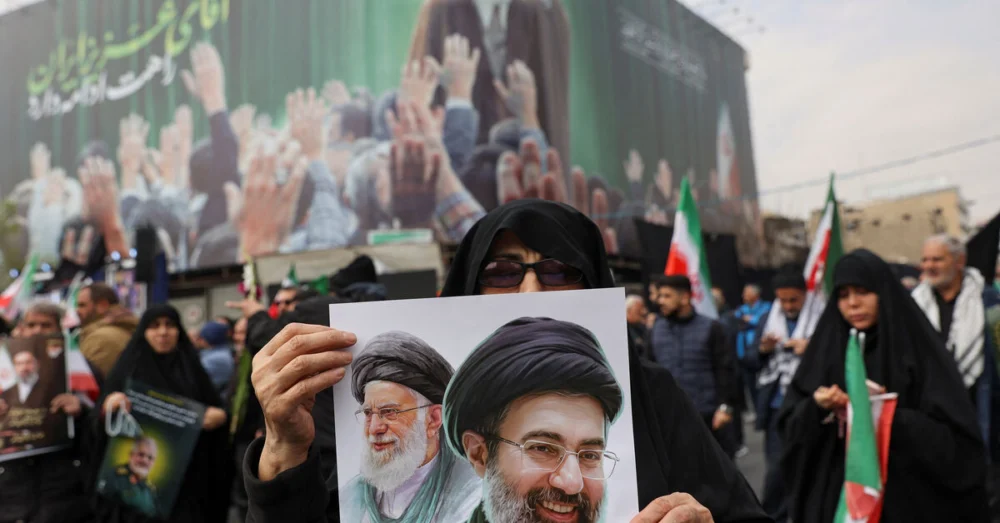
Amidst the chaos of bombardment, life for ordinary Iranians has been irrevocably altered, yet the societal response is far from monolithic. The original article highlights the dire warnings issued by Iran’s police chief, Ahmadreza Radan, on Wednesday: "Anyone taking to the streets at the enemy’s request will be confronted as an enemy, not a protester. All our security forces have their fingers on the trigger." This chilling declaration, backed by the regime’s proven track record of brutal suppression, serves as a potent deterrent against any nascent protest movements. The memory of thousands killed during the January protests remains fresh, underscoring the lethal risks associated with public dissent.
While many Iranians harbor deep-seated resentment towards the clerical regime, and some openly celebrated the death of Khamenei, whose security forces were responsible for crushing previous anti-government demonstrations, there has been no discernible sign of widespread protest since the war began. Ali, a 26-year-old from Tehran, encapsulated this paradox, stating, "I hate this regime. I want it to go, but under bombardment there are no streets left to protest in." This sentiment underscores the profound practical and psychological barriers to collective action in a warzone. The immediate existential threat of bombs falling from the sky eclipses the long-term desire for political change for many.
Despite the intense military activity, daily life in Tehran continues, albeit with significant modifications. Streets are noticeably quieter, reflecting the fear and disruption, but essential services largely remain operational. Banks, petrol stations, and shops continue to function, though with reduced hours and stricter rationing of fuel, indicative of the economic strain and logistical challenges. All government offices are reportedly open, signaling the regime’s efforts to maintain an appearance of control and continuity.
However, the war has also ignited a complex surge of nationalist sentiment. A Tehran resident, requesting anonymity for fear of reprisal, observed, "Despite discontent with the regime, the sense of Iranian pride and patriotism is growing and people are expressing hatred for Reza Pahlavi, Trump and Netanyahu." This phenomenon, where external aggression paradoxically unifies a populace around its embattled government, even one it despises, is a well-documented aspect of conflict psychology. Reza Pahlavi, the son of Iran’s former Shah, had been an outspoken advocate for military intervention, making him a lightning rod for this resurgent nationalism. This dynamic complicates any external strategy relying on popular uprisings, as the immediate "enemy" becomes the foreign aggressor rather than the domestic regime.
Intriguingly, a university teacher in Tehran, also speaking anonymously, offered a cynical perspective: "Iran prefers the war to continue because if it ends, protests will start due to economic problems and shortcomings that the war has also worsened." This analysis suggests a calculated strategy by the regime, where the external threat of war serves as a convenient justification for ongoing hardship and a powerful deterrent against internal dissent, diverting public anger towards foreign adversaries.
Economic Strangling and Humanitarian Crisis
The pre-existing "maximum pressure" sanctions had already severely crippled Iran’s economy. The U.S. campaign targeted Iran’s vital oil exports, its banking sector, and key industries, leading to soaring inflation, high unemployment, and a drastic devaluation of the national currency, the rial. The International Monetary Fund (IMF) had projected significant contractions in Iran’s GDP even before the war, with analysts estimating hundreds of billions of dollars in lost revenue and economic output over the past few years.
The current bombing campaign has compounded these economic woes dramatically. The destruction of airports, ports, and other civilian infrastructure—including roads, bridges, and power grids—has dealt a catastrophic blow to Iran’s productive capacity and its ability to conduct trade or distribute goods domestically. This infrastructure damage will necessitate immense reconstruction efforts, further burdening a state already struggling with depleted resources. The long-term implications for Iran’s ability to revive its stagnant economy, address its population’s grievances, and maintain social stability are dire.
Beyond the economic fallout, the humanitarian situation is rapidly deteriorating. Reports from international aid organizations, though often limited by access restrictions, indicate a growing crisis. Civilian casualties are mounting, and the destruction of homes has led to widespread displacement, creating an urgent need for shelter, food, clean water, and medical supplies. Healthcare systems, already strained by sanctions, are now overwhelmed by war-related injuries and the collapse of infrastructure. The United Nations and various international bodies have issued calls for de-escalation, adherence to international humanitarian law, and unimpeded access for aid delivery, warning of a potential large-scale humanitarian catastrophe if the conflict continues unabated.
Geopolitical Ripples and Future Scenarios
The war in Iran carries profound geopolitical implications that extend far beyond its borders. The immediate regional impact is one of heightened instability. Neighboring countries, including Gulf Arab states like Saudi Arabia and the UAE, are closely monitoring the conflict, wary of its potential to ignite a broader regional conflagration. The conflict could exacerbate existing proxy wars in Iraq, Syria, and Yemen, drawing in more actors and further destabilizing an already volatile region. The future of the Strait of Hormuz, a critical chokepoint for global oil shipments, remains a significant concern, with any disruption having immediate and severe repercussions for global energy markets.
Globally, the conflict has already contributed to significant volatility in oil prices, impacting economies worldwide. The long-term economic damage to Iran, a major oil producer, and the broader regional instability could lead to sustained higher energy costs and disruptions to international trade routes.
The death of Ayatollah Ali Khamenei introduces a critical element of uncertainty regarding Iran’s future leadership. The succession process, traditionally managed by the Assembly of Experts, is likely to be fraught with internal power struggles between various factions within the clerical establishment and the Islamic Revolutionary Guard Corps (IRGC). The outcome of this succession will profoundly shape Iran’s domestic and foreign policy for decades to come, potentially influencing its stance on the nuclear program, its regional engagements, and its approach to internal dissent.
For the U.S.-Israel alliance, the war represents both a moment of profound convergence and potential future strain. While the joint military campaign demonstrates a shared strategic objective against Iran, differences in desired outcomes (e.g., immediate regime change versus long-term weakening) and exit strategies could emerge as the conflict progresses. The international community, largely sidelined in the direct military action, will face immense pressure to mediate a resolution, address the humanitarian crisis, and prevent a broader regional war. The long-term implications for the Middle East’s security architecture, the balance of power, and the prospects for any future diplomatic engagement with Iran remain deeply uncertain as the devastating conflict continues to unfold.

Related Posts
The Sino-Indian Relationship: Poised to Redefine Global Geopolitics in the Latter Half of the 21st Century

Sunshine 100 China Holdings Vows to Fight Winding-Up Petition Amid Deepening Property Sector Crisis