Iran Defends Military Strikes on US Installations as Legitimate Self-Defense Amid Escalating Regional Tensions
The Iranian embassy in South Africa has firmly defended Tehran’s decision to target American military installations, asserting that these actions are a legitimate exercise of self-defense under international law amidst a rapidly escalating confrontation with the United States and Israel. Ambassador Mansour Shakib Mehr, speaking at a press briefing in Pretoria, emphasized that Iran’s military responses are strategically directed at bases utilized for aggression against the Islamic Republic, not against the sovereign governments of neighboring Gulf states.
"Our act is our inherent right," Ambassador Mehr stated, addressing a gathering of journalists on Wednesday. "Our actions are directed at military bases used against us." He further clarified that Iran maintains respect for the territorial integrity of its regional neighbors, even in instances where American military facilities are situated on their soil. "Our actions are directed at military bases used against us, not against those governments," he reiterated, aiming to preempt concerns about broader regional destabilization stemming from Iran’s defensive posture.
The press conference occurred against a backdrop of heightened tensions across the Middle East. This surge in hostilities followed weekend strikes attributed to the US and Israel, which reportedly resulted in the deaths of Iran’s supreme leader and several high-ranking commanders. In response to these alleged fatalities, Tehran initiated retaliatory attacks targeting US military assets throughout the region. Reports also indicate that Israeli strikes have impacted civilian sites within Iran, including educational and medical facilities. One particularly tragic incident in Minab reportedly claimed the lives of 183 schoolgirls in an attack on a girls’ school, marking one of the most severe civilian casualties since the conflict intensified.
Iran has officially accused both Washington and Tel Aviv of engaging in what it terms an "unlawful act of aggression," arguing that these strikes represent a clear violation of international law and Iranian sovereignty. Ambassador Mehr specifically cited Article 2(4) of the United Nations Charter, which prohibits the threat or use of force against the territorial integrity or political independence of any state, as a key legal principle violated by the perceived aggressions against Iran. In stark contrast, Iran asserts that its own retaliatory measures are fully compliant with Article 51 of the UN Charter, which enshrines the inherent right to self-defense.
"We did not start this war, but we will defend our country," Ambassador Mehr declared, underscoring Iran’s defensive stance.
Escalating Regional Threat and Global Economic Ramifications
The current escalation has fueled widespread concerns about the potential for a wider regional conflict, with significant implications for global energy markets. The Strait of Hormuz, a critical maritime chokepoint through which approximately one-fifth of the world’s daily oil supply transits, has become a focal point of heightened military tension. While Iran’s retaliatory actions have thus far primarily targeted US military installations, the expanding confrontation raises the specter of additional countries being drawn into direct hostilities.
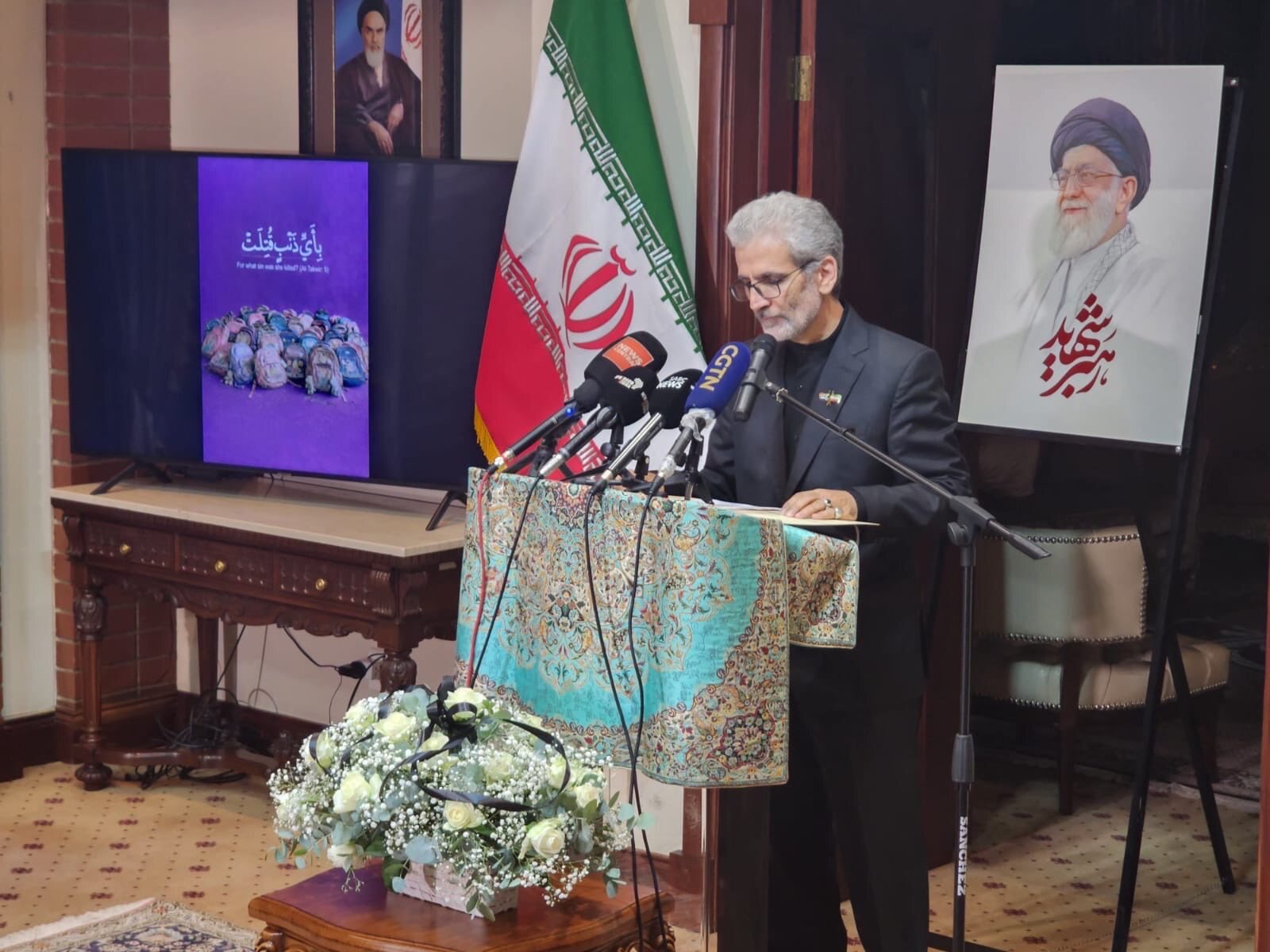
Responding to speculation regarding potential military assistance from allies such as Russia or China in the event of further escalation, Ambassador Mehr indicated that Tehran has not formally requested such support. He expressed confidence in Iran’s capability to defend itself. However, he issued a stern warning about the broader ramifications of continued aggression, stating, "This aggression is not merely an attack on Iran; it is an assault on the entire region." This statement highlights Iran’s perception of the conflict as a threat to regional stability rather than a purely bilateral dispute.
International Law and Iran’s Stance
Tehran believes that the United Nations and other international bodies bear a responsibility to address what it characterizes as unlawful military aggression. Ambassador Mehr emphasized the importance of upholding international law as the cornerstone for regional stability. "The path to stability is respect for international law," he asserted. "Without that, the region will continue to face instability."
Addressing Allegations of Funding South Africa’s ICJ Case
During the press briefing, Ambassador Mehr also directly addressed and refuted allegations circulating within South African political discourse suggesting that Iran had funded the country’s genocide case against Israel at the International Court of Justice (ICJ). These claims have surfaced periodically in political commentary and on social media platforms since South Africa formally filed its case against Israel in December 2023, alleging violations of the Genocide Convention through Israel’s military campaign in Gaza.
"That is a rumor that is being circulated," Mehr stated unequivocally when questioned about the allegation. He described South Africa’s legal initiative as a "courageous act" and stressed that the case was initiated by the South African government. "The case was filed by the government of South Africa. If anyone has evidence of such allegations, they should present it," he challenged, demanding substantiation for the claims. The case brought by South Africa has emerged as one of the most significant international legal challenges concerning Israel’s conduct in the ongoing conflict in Gaza.
Clarifying Military Operations and Regional Diplomacy
Ambassador Mehr further elaborated on Iran’s operations in the Gulf, particularly concerning neighboring countries that host US military bases. He reiterated Iran’s respect for the sovereignty of these nations and stated that they are not considered adversaries. However, he cautioned that US military facilities operating from these territories would be viewed as legitimate targets if they were used to launch attacks against Iran. He confirmed that Iranian officials had engaged in direct communication with governments in the region to clearly articulate the parameters of Iran’s military response.
Furthermore, Iran has reportedly issued warnings to civilian populations, advising them to avoid military installations that could potentially become targets during the conflict. This suggests a deliberate effort by Tehran to mitigate civilian casualties while asserting its right to retaliate against perceived military threats. Iran has indicated its readiness to continue responding to attacks on its territory, signaling a sustained commitment to defending its national interests.
Despite the current volatile climate, Ambassador Mehr expressed belief in the potential for diplomacy to de-escalate the situation and prevent further escalation. This suggests that while Iran is prepared to defend itself militarily, it remains open to diplomatic solutions for achieving long-term stability in the region. The Ambassador’s statements underscore Iran’s position that adherence to international legal frameworks is paramount for fostering peace and security in the Middle East. The ongoing events highlight the intricate geopolitical landscape and the delicate balance of power in a region critical to global economic and political stability.

Related Posts

Lagos State Government Issues Urgent Flood Warning as 2026 Rainy Season Forecast Projects Intense Precipitation
Mediterranean Shipping Company signs 45-year agreement with Nigerdock to develop Snake Island Container Terminal