Human Rights Watch Urges Formula 1 and FIA to Implement Rigorous Due Diligence Against Sportswashing Ahead of 2026 Grand Prix Season
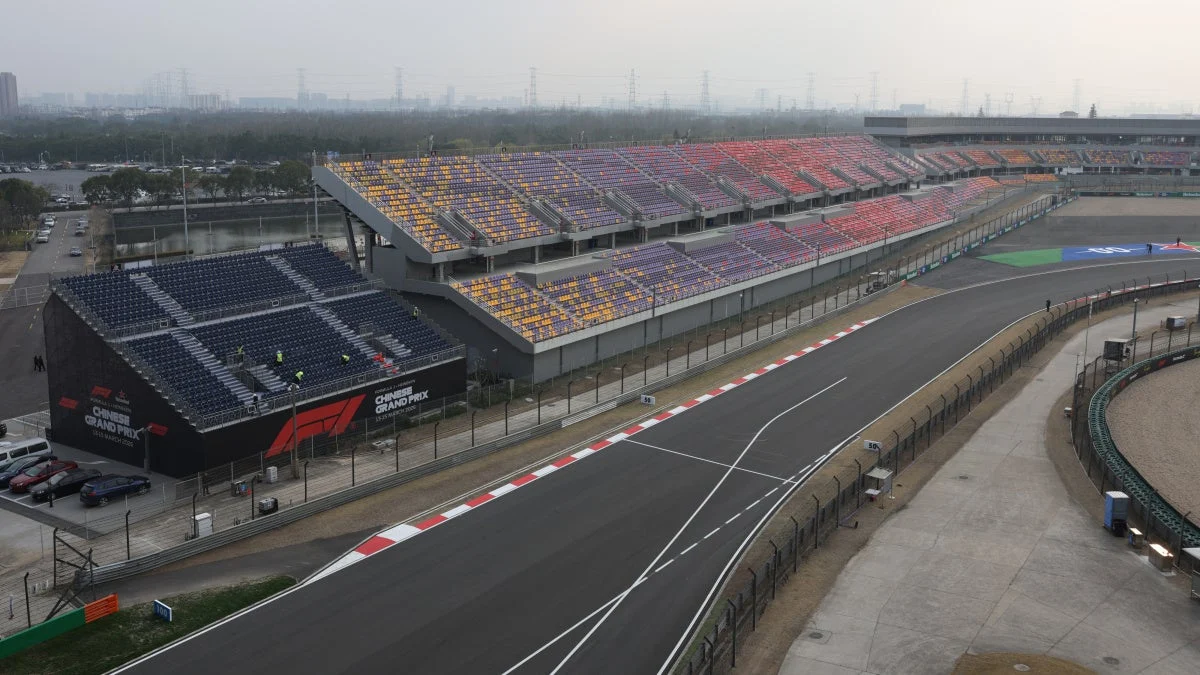
Paris — As Formula One (F1) and its governing body, the Fédération Internationale de l’Automobile (FIA), prepare for a sprawling 2026 Grand Prix season, Human Rights Watch (HRW) has issued a formal call for the organizations to address the escalating risk of "sportswashing." The international advocacy group warns that without stringent human rights due diligence, the 2026 season—which includes races in 22 countries—threatens to provide a global platform for repressive regimes to obscure systematic abuses and "launder" their international reputations through the prestige of elite motorsport.
The 2026 calendar features several host nations with documented histories of severe human rights violations, including Bahrain, China, and Saudi Arabia, alongside concerns regarding the shifting political and civil rights landscape in the United States. Human Rights Watch asserts that the failure of F1 and the FIA to respond to these risks undermines their stated mission to foster a "positive legacy" and risks compromising the integrity of the sport by making it a silent partner to authoritarianism.
The Growing Phenomenon of Sportswashing in Global Racing
The term "sportswashing" refers to the practice of individuals, corporations, or governments using high-profile sporting events to burnish their reputations and distract from unethical conduct or human rights abuses. In the context of Formula 1, this often involves massive state-funded investments in race infrastructure and hosting fees, which are used to project an image of modernity, progress, and international integration.
Minky Worden, director of global initiatives at Human Rights Watch, emphasized the allure of the Grand Prix for abusive governments. "Abusive governments around the world relish the Grand Prix because it offers them a dazzling distraction from their human rights records," Worden stated. She argued that the sheer visibility of F1, which reaches hundreds of millions of viewers globally, makes it an ideal tool for state propaganda if not managed with ethical oversight.
Formula 1’s expansion into non-traditional markets over the last two decades has brought the sport into direct contact with complex geopolitical environments. While F1 leadership often argues that the presence of the sport can act as a catalyst for social change, HRW and other monitoring groups argue that without specific, measurable human rights criteria, the presence of the race often serves only to validate the status quo.
Chronology of Advocacy and Institutional Silence
The current push for accountability follows a timeline of attempted engagement between human rights organizations and motorsport’s governing bodies. On February 24, 2026, Human Rights Watch formally contacted both the FIA and F1 leadership to inquire about the adoption of specific policies to mitigate human rights risks associated with the 2026 season. As of late February, neither organization has provided a formal response to these inquiries.
This lack of communication follows a pattern of institutional resistance to external human rights scrutiny. While F1 released an Environmental, Social, and Governance (ESG) update in 2024, promising to leave a "legacy of positive change," critics argue these documents often lack the enforcement mechanisms necessary to address state-level repression. The FIA, for its part, has recently faced internal and external pressure regarding its "neutrality" rules, which restrict drivers from making "political, religious, or personal" statements without prior approval—a move many see as an attempt to silence athlete activism on human rights.
The timeline of concern also includes the FIA’s choice of venues for its own administrative functions. In 2025, the FIA held its General Assemblies in Tashkent, Uzbekistan, a country with a long history of restricted civil liberties. Reports suggest that upcoming assemblies may be held in China, further signaling a pivot toward regions where human rights oversight is limited.
Regional Analysis: Documented Abuses in 2026 Host Nations
The 2026 Grand Prix season is scheduled to touch down in several locations where Human Rights Watch has documented ongoing and severe rights violations.
China: Crimes Against Humanity and Systematic Repression
In China, where the second race of the 2026 season is slated to occur, the government continues to face international condemnation for its treatment of Uyghurs and other Turkic Muslims in the Xinjiang region. Human Rights Watch has characterized these actions as crimes against humanity. Beyond Xinjiang, the Chinese authorities maintain a rigid grip on freedom of expression and association, frequently persecuting peaceful critics and religious minorities. The use of international sporting events, such as the 2022 Winter Olympics, as a tool for state propaganda is a well-documented strategy of the Chinese Communist Party.
Bahrain: Two Decades of Repression and Sportswashing
Bahrain has hosted a Grand Prix since 2004, and throughout that tenure, the race has been a flashpoint for domestic protest. HRW reports that detainees in Bahrain face torture and the denial of essential medical care. While the government issued pardons for some inmates recently, prominent human rights defenders and political leaders remain imprisoned. Historical data from the 2011 "Arab Spring" protests and subsequent years show a recurring pattern of authorities cracking down on activists in the lead-up to the race to ensure a "sanitized" environment for international visitors.
Saudi Arabia: Surge in Executions and Labor Exploitation
The Grand Prix in Jeddah, scheduled for April 2026, takes place against a backdrop of a dramatic increase in capital punishment. In 2025 alone, Saudi Arabia recorded at least 356 executions by December. The kingdom’s "Vision 2030" plan relies heavily on sports to transform its global image, yet the legal reality remains one of arbitrary detention for online speech and widespread labor abuses under the kafala (sponsorship) system, which leaves migrant workers vulnerable to exploitation and physical danger.
The United States: Shifts Toward Authoritarianism
Uniquely, the 2026 report highlights concerns within the United States, which is scheduled to host races in May, October, and November. HRW notes a "slide toward authoritarianism" during President Donald Trump’s second term, citing the domestic deployment of National Guard forces and retaliatory actions against political perceived enemies. The administration’s aggressive anti-immigrant policies, characterized by racial profiling and summary deportations, have raised alarms regarding civil rights. Furthermore, the receipt of a "Peace Prize" from FIFA by President Trump has been cited by HRW as an example of how sporting bodies are being leveraged to burnish the reputations of leaders domestic and abroad.
Geopolitical Instability and the Safety of the Event
The 2026 season is also unfolding amidst heightened regional tensions. Following strikes by the United States and Israel on Iran on February 28, 2026, and subsequent retaliatory actions in the Gulf region, the security landscape for races in the Middle East has become increasingly volatile. While these developments may force changes to the race agenda, Human Rights Watch insists that security concerns must not be used as a pretext to bypass human rights due diligence. On the contrary, instability often leads to increased domestic repression, making oversight even more critical.
The Framework for Accountability: UN Guiding Principles
The primary demand from Human Rights Watch is for F1 and the FIA to formally endorse and implement the United Nations Guiding Principles on Business and Human Rights (UNGPs). These principles, adopted by the UN Human Rights Council in 2011, provide a global standard for preventing and addressing the risk of adverse human rights impacts linked to business activity.
Other major sporting bodies, including FIFA and the International Olympic Committee (IOC), have already begun integrating these principles into their hosting requirements and statutes. HRW argues that F1 and the FIA are lagging behind their peers. While F1 has a "Statement of Commitment to Respect for Human Rights," and the FIA’s Code of Ethics mentions a responsibility to safeguard the "integrity and reputation of motor sport," these remain aspirational without concrete implementation strategies.
To move from rhetoric to reality, HRW recommends that F1 and the FIA:
- Publicly Disclose Due Diligence Measures: Provide transparency on the steps taken to identify and mitigate rights risks in each host country.
- Establish Objective Criteria: Create a transparent bidding process that includes human rights benchmarks that a country must meet to host a race.
- Engage Stakeholders: Conduct meaningful consultations with local human rights groups, trade unions, and fan organizations rather than relying solely on government assurances.
- Use Leverage: Utilize the immense economic and cultural influence of the Grand Prix to advocate for the release of political prisoners and the protection of civil liberties in host nations.
Broader Impact and the Future of Motorsport
The implications of the FIA and F1’s current trajectory extend beyond individual races. As motorsport continues to expand its global footprint, the lack of a robust human rights framework creates a "race to the bottom," where host countries are selected based on their ability to pay massive fees rather than their adherence to international law. This not only harms the populations of those countries but also poses a long-term risk to the brand value and moral standing of Formula 1.
The global fanbase of F1 is increasingly composed of younger, socially conscious viewers who demand ethical consistency from the brands they support. By ignoring the human rights impacts of their operations, F1 and the FIA risk alienating this demographic and facing increased scrutiny from sponsors and corporate partners who are themselves bound by ESG commitments.
"While many nations wish to host Grand Prix, F1 and the FIA carry a responsibility to safeguard against adverse human rights impacts arising from these events," Worden concluded. "If F1 and the FIA are serious about their ambition to drive positive change wherever they race, they need to do much more to protect human rights."
As the 2026 season approaches, the world’s premier racing series stands at a crossroads: it can continue to provide a "dazzling distraction" for repressive regimes, or it can take the necessary steps to ensure that its legacy is defined by more than just the speed of its cars, but by the integrity of its global operations.

Related Posts
Israeli Settler Violence and West Bank Land Seizures Accelerate Under the Cover of Regional Conflict
Landmark Court Ruling in Ukraine a Step Toward Equality