Global Powers Unleash Historic Oil Reserves Amid Escalating Iran Conflict and Looming Energy Crisis
PARIS — In an unprecedented display of global economic unity and strategic urgency, the world’s leading economies have agreed to release a colossal 400 million barrels of crude oil from their emergency reserves. This historic decision, announced by the International Energy Agency (IEA) on Wednesday, March 11, 2026, is a direct response to the spiraling fears that a conflict spearheaded by the United States in the oil-rich Gulf region could ignite a profound and prolonged global energy crisis. The move, more than double the scale of any previous coordinated release, underscores the gravity of the current geopolitical landscape and its immediate threat to global energy stability and economic resilience.
The agreement, forged on Tuesday following an extraordinary meeting of the IEA’s 32 member states, including economic powerhouses such as the United States, Japan, Germany, the United Kingdom, and France, aims to counteract the rampant surge in crude oil prices and mitigate the severe risk of a supply shock. This shock has been precipitated by the escalating conflict in Iran, which has seen critical energy infrastructure targeted and vital shipping lanes disrupted. The sheer volume of the release—eclipsing the 182 million barrels unlocked after Russia’s invasion of Ukraine in 2022—highlights the acute concern among international policymakers regarding the potential for severe economic repercussions worldwide.
Escalation in the Middle East: A Catalyst for Crisis
The decision comes at a moment of heightened geopolitical tension, as American and Israeli military actions in the Persian Gulf region have been met with retaliatory strikes from Iran. These attacks have specifically targeted vital energy infrastructure across the Gulf, sending shockwaves through global commodity markets. Compounding the crisis, Iran’s strategic closure of the Strait of Hormuz, the narrow maritime chokepoint through which approximately one-fifth of the world’s total petroleum consumption (around 21 million barrels per day) passes daily, has transformed a regional conflict into a potential global economic catastrophe.
Prior to the IEA’s announcement, crude oil prices had already soared past $100 per barrel, reaching multi-year highs driven by the immediate threat to supply. The targeting of key oil and gas facilities, coupled with the closure of the Strait, had forced numerous production sites in the region to halt operations, creating an immediate and palpable fear of a significant supply deficit. While prices saw a slight retreat to around $90 per barrel after the G7 nations signaled their principal support for an emergency release, the underlying volatility and the risk of further escalation remain profoundly high. The initial hope among many states that the conflict would be brief and have a limited impact on energy supplies has been thoroughly dispelled by the sustained intensity of hostilities and the prolonged disruption of maritime trade, emphasizing the urgent need for intervention.
The IEA’s Mandate and Unprecedented Response
Founded in Paris in 1974 in the aftermath of the 1973 oil embargo, the International Energy Agency was established to ensure the energy security of its member countries and to coordinate their responses to major oil supply disruptions. Its core mandate involves maintaining emergency oil stocks equivalent to at least 90 days of net oil imports, a collective safety net designed to insulate economies from sudden shocks. The current release is not just the largest in the IEA’s nearly five-decade history but also arguably its most critical test, reflecting the complex interplay of military conflict, economic stability, and energy security on a global scale.
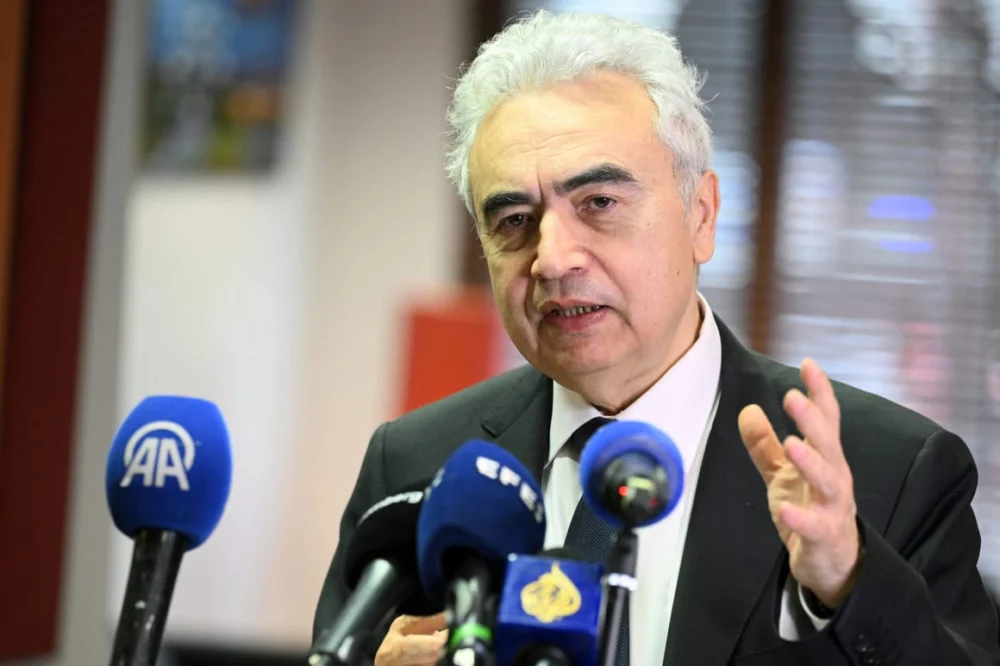
Fatih Birol, the Executive Director of the IEA, articulated the gravity of the situation, stating, "The challenges we face in the oil market are of an unprecedented magnitude, and I am therefore very pleased that IEA member countries have responded with an emergency collective action of unprecedented scale." His remarks underscore the collective understanding among member states that conventional market mechanisms alone cannot adequately address the current crisis, necessitating a coordinated, strategic intervention. The IEA’s communiqué released on Wednesday further specified that the oil would be made available "within a timeframe adapted to the national situation of each member country," allowing for flexibility while ensuring a swift, collective impact.
This strategic deployment of reserves serves multiple purposes: it aims to inject immediate supply into the market to calm prices, deter speculative trading that often exacerbates price volatility during crises, and signal to both producers and consumers the international community’s resolve to maintain stability. Historically, IEA releases have been triggered by significant events such as the Gulf War in 1991 (17.3 million barrels), Hurricanes Katrina and Rita in the U.S. Gulf Coast in 2005 (60 million barrels), and the Libyan civil war in 2011 (60 million barrels), in addition to the 2022 Ukraine crisis. Each instance demonstrated the IEA’s role as a vital safety net, but none approached the current scale, emphasizing the exceptional nature of the current threat originating from the Gulf. This 400-million-barrel release dwarfs all previous efforts, signaling the profound apprehension among global leaders.
Global Coordination and Political Leadership
The groundwork for this extensive release was laid earlier in the week when G7 nations expressed their strong support for the measure. This endorsement was crucial, given that the G7 countries—Canada, France, Germany, Italy, Japan, the United Kingdom, and the United States—collectively account for approximately 70% of the planned 400 million barrel release. French President Emmanuel Macron, who presided over a G7 videoconference immediately following the IEA’s announcement to discuss the economic ramifications of the Iran conflict, highlighted this significant contribution. "The G7 represents 70% of this announcement," Macron stated, emphasizing the bloc’s leading role in the collective effort. He further urged G7 members to explore "everything we can do to increase our global production," suggesting that the emergency release is part of a broader, multi-faceted strategy to stabilize energy markets beyond just drawing down reserves. This call could imply discussions around boosting output from existing fields or accelerating investment in new ones.
Following the G7 meeting, President Macron underscored the strategic intent behind the action: "We are sending a market signal for prices to fall." This statement encapsulates the dual objective of the release: to provide tangible relief to supply constraints by physically increasing the availability of oil and to manage market expectations, thereby curbing speculative price hikes that often thrive on uncertainty and fear.

The initiative to unlock reserves gained significant traction thanks to the fervent advocacy of countries heavily reliant on Middle Eastern oil imports, notably the United States, Japan, and South Korea. According to two EU officials familiar with the discussions, these nations were among the most ardent proponents, acutely aware of their vulnerability to supply disruptions from the region. European countries, which generally import a comparatively smaller proportion of their oil from the Gulf region (often relying more on sources from the North Sea, Africa, and the Americas), initially exhibited more reluctance. However, as the scope and potential for a protracted crisis became clearer, and the indirect economic impacts on global supply chains and inflation became undeniable, they were ultimately convinced of the necessity of a unified response, as confirmed by another EU official handling energy matters. This shift highlights the growing recognition that a crisis in any major oil-producing region inevitably has global ramifications, regardless of direct import dependencies.
Logistical Challenges and Future Outlook
While the agreement marks a significant step, the practicalities of implementation and the long-term outlook present their own set of challenges. The IEA’s statement indicated that the oil would be released "within a timeframe adapted to the national situation of each member country." This flexibility, while practical, also means that the immediate impact on global supply might be phased rather than instantaneous, requiring careful monitoring of market reactions over the coming weeks.
Within the European Union, the coordination of the release is a complex undertaking, given the diverse energy mixes and import dependencies of its member states. EU Energy Commissioner Dan Jørgensen welcomed the decision, posting on social media, "In these difficult times, global unity and cooperation are essential." He announced that a meeting of the European Oil Coordination Group would convene on Thursday, followed by a meeting of EU energy ministers on Monday. These gatherings are crucial for EU member states, some of whom are not IEA members, to discuss how to effectively coordinate their contributions, ensure equitable distribution, and implement a cohesive regional response without creating internal market distortions.
A significant concern highlighted by an EU official and a member state representative is the difficulty in rapidly reconstituting oil stocks to meet the EU’s required reserve levels before the onset of winter. This challenge would be exacerbated if the closure of the Strait of Hormuz were to extend for a prolonged period, restricting global oil flows and making future replenishment efforts more arduous and costly. The strategic imperative to maintain robust reserves for future contingencies means that every barrel released now must eventually be replaced, a task made complex by ongoing geopolitical instability and potentially constrained global supply.
Individual nations are already detailing their contributions. The United Kingdom, for instance, has pledged 13.5 million barrels, drawn from its total strategic reserves of 76.6 million barrels. Ed Miliband, the UK Energy Minister, affirmed his country’s commitment: "With this measure, the United Kingdom is playing its part in collaborating with its international allies to address disruptions in oil markets." He also noted the UK’s "robust and diversified energy supplies" and the role of price caps in protecting energy bills, indicating a multi-faceted approach to energy security that combines emergency releases with domestic consumer protection measures.
Broader Economic and Geopolitical Implications
The release of 400 million barrels is more than a technical adjustment to supply; it is a powerful political statement. It signals to market speculators that major powers are prepared to intervene decisively to prevent price gouging and to mitigate the economic fallout of geopolitical conflicts. The immediate goal is to stabilize prices and prevent further inflationary pressures that could derail global economic recovery efforts already fragile from previous crises. Higher oil prices directly translate to increased costs for transportation, manufacturing, and consumer goods, impacting household budgets, corporate profitability, and national trade balances alike. Economists warn that sustained high energy costs could trigger widespread recessionary pressures.
Beyond the immediate economic relief, this action underscores the ongoing vulnerability of the global energy system to regional conflicts, particularly in the Middle East. It reignites debates about energy independence, diversification of supply sources, and the acceleration of renewable energy transitions as long-term strategies for national and international security. The crisis in the Gulf, combined with the earlier conflict in Ukraine, highlights the imperative for nations to reduce their reliance on volatile fossil fuel markets dominated by geopolitical risks, pushing for greater investment in sustainable and resilient energy infrastructure.
Furthermore, the coordinated response from the IEA and G7 sends a clear message to all parties involved in the Iran conflict: the international community will not stand idly by as regional instability threatens global economic order. While the release itself is not a military intervention, it is an economic countermeasure designed to cushion the world from the most severe consequences of the conflict, potentially influencing the calculations of the belligerents by demonstrating the global resolve to mitigate economic disruption. This collective action serves as a deterrent against further destabilization of energy markets.
In the long term, the effectiveness of this emergency release will depend on several critical factors: the duration and intensity of the conflict in Iran, the ability of member states to replenish their strategic reserves without triggering further market instability, and the broader global economic response to sustained high energy costs. Analysts suggest that while the release provides crucial breathing room, it does not resolve the underlying geopolitical tensions. The coming weeks and months will reveal whether this historic intervention can effectively navigate the world through one of its most complex and perilous energy crises in recent memory. The international community watches closely, hoping that this collective action can prevent a full-blown energy catastrophe and pave the way for a more stable global economic environment.
This article was originally published by POLITICO in English, then edited in French by Jean-Christophe Catalon.

Related Posts
Comment LFI lance les influenceurs dans la présidentielle
Volodymyr Zelenskyy’s Escalating Rhetoric Toward Western Allies Reflects Deepening Frustration Over Stalled Conflict Resolution