
Four Airmen Confirmed Dead and Two Missing Following KC-135 Stratotanker Crash During Combat Operations in Western Iraq
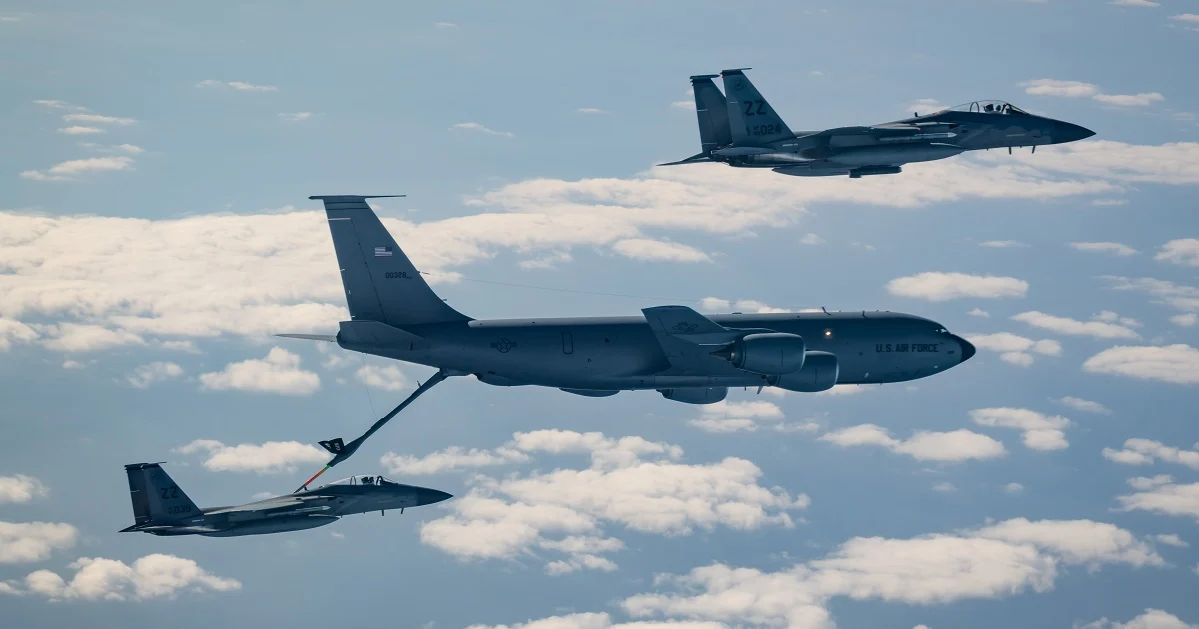
United States Central Command (CENTCOM) confirmed on Friday that four U.S. service members were killed when an Air Force KC-135 Stratotanker refueling aircraft crashed in western Iraq during the ongoing high-intensity conflict known as Operation Epic Fury. The incident, which occurred on Thursday afternoon, marks one of the deadliest single-day losses for the U.S. Air Force since the initiation of combat operations against Iranian forces and their regional proxies earlier this month. As of Friday morning, two additional crew members remain unaccounted for, prompting a massive search and rescue operation in the region.
According to a formal statement released by CENTCOM, the aircraft went down at approximately 2:00 p.m. ET on March 12. The KC-135 was conducting a standard but critical aerial refueling mission in support of combat sorties when it crashed in what officials described as "friendly territory." While the cause of the crash remains under investigation, military leadership has been quick to clarify that the loss does not appear to be the result of enemy engagement.
During a press briefing at the Pentagon on Friday, Chairman of the Joint Chiefs of Staff Gen. Dan Caine, appearing alongside Defense Secretary Pete Hegseth, provided further details regarding the recovery efforts. Gen. Caine emphasized that the military is currently treating the situation as an "active rescue" for the two missing airmen. He confirmed that the bodies of four airmen have been recovered from the crash site and that the families are being notified.
"The incident occurred in friendly territory in western Iraq while the crew was on a combat mission," Gen. Caine stated. "It was not the result of hostile or friendly fire. The Air Force and U.S. Central Command will provide updates as information becomes available."
Chronology of the Incident and Immediate Response
The loss of the KC-135 occurred during a period of peak operational tempo for U.S. and coalition forces. On the afternoon of March 12, two aircraft were operating in tandem as part of a refueling track designed to sustain fighter jets and bombers engaged in strikes further east. While the first aircraft—the downed KC-135—encountered catastrophic issues, the second aircraft involved in the mission was able to land safely at a nearby installation.
Initial reports of a "downed bird" reached CENTCOM headquarters shortly after 2:00 p.m. ET. Quick Reaction Forces (QRF) and Combat Search and Rescue (CSAR) teams were dispatched to the coordinates in western Iraq within the hour. By late Thursday night, recovery teams had secured the site and confirmed the deaths of four of the six personnel on board. The identities of the deceased are being withheld for at least 24 hours following the notification of next of kin, in accordance with Department of Defense policy.
The crash site, located in a relatively secure sector of western Iraq, has been cordoned off by U.S. Army ground units to allow Air Force safety investigators to begin the arduous process of "black box" recovery and wreckage analysis. The investigation will likely focus on mechanical failure, structural fatigue, or environmental factors, given that hostile action has been ruled out by the Joint Chiefs.
Technical Profile: The KC-135 Stratotanker and the "Workhorse" Dilemma
The KC-135 Stratotanker has been the backbone of U.S. aerial refueling capabilities for over 60 years. Based on the Boeing 707 airframe, the KC-135 entered service in the late 1950s. While the fleet has undergone numerous upgrades—including the transition to more powerful and fuel-efficient CFM56 engines (designated as the KC-135R model)—the airframes themselves are among the oldest in the U.S. inventory.
The loss of a KC-135 during active combat operations highlights the immense strain placed on the aging tanker fleet. During Operation Epic Fury, these aircraft are required to fly near-continuous cycles to keep F-15s, F-16s, and F-35s airborne over vast distances. A single KC-135 can carry up to 200,000 pounds of fuel, acting as a "flying gas station" that allows short-range fighters to conduct long-range precision strikes.
Aviation analysts suggest that the high operational tempo of the last two weeks may be exacerbating existing maintenance challenges within the KC-135 fleet. With hundreds of sorties being flown daily, the "turnaround time" for maintenance crews has been slashed, potentially increasing the risk of mechanical oversight or part failure. However, the Air Force has maintained that its rigorous inspection protocols ensure the airworthiness of every aircraft before takeoff.
Escalating Costs and Losses in Operation Epic Fury
The crash of the KC-135 is the latest in a series of setbacks for U.S. forces since Operation Epic Fury began on March 1. This incident marks the fourth manned U.S. aircraft lost in less than two weeks.
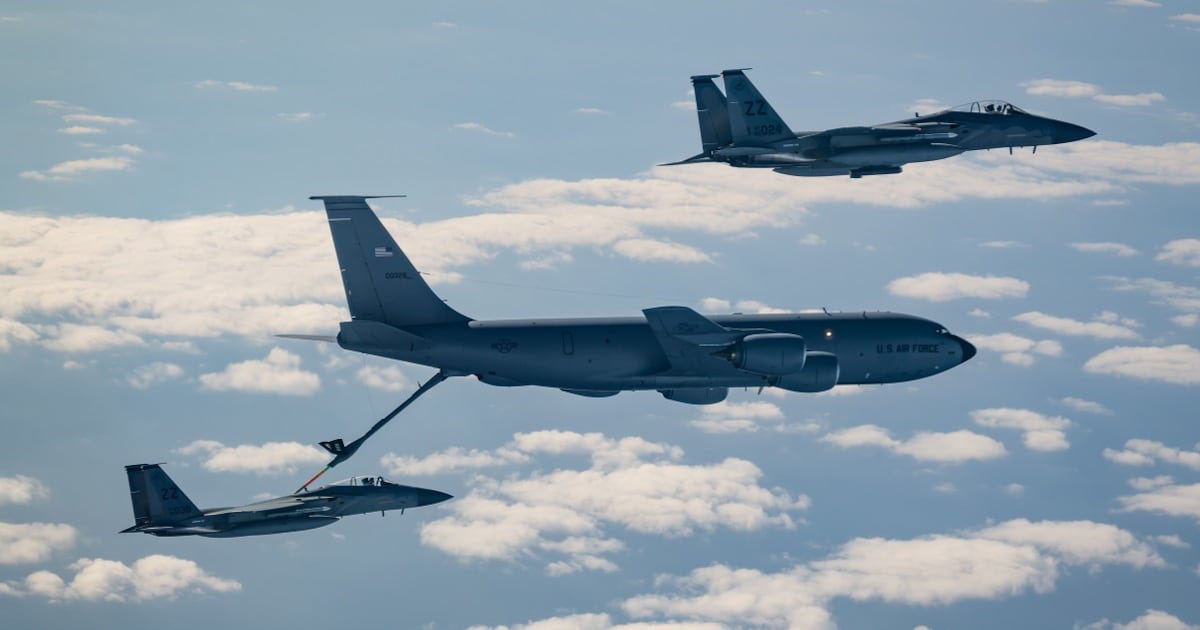
The most notable previous loss occurred on the very first day of the operation, when three U.S. F-15E Strike Eagles were shot down over Kuwait. In a tragic error, the jets were engaged by a Kuwaiti F/A-18 in a friendly fire incident. Fortunately, in that instance, all six crew members ejected and were safely recovered. The loss of the KC-135, however, has resulted in the highest single-day death toll for the Air Force in this theater to date.
The human and financial costs of the conflict are mounting rapidly. Prior to the tanker crash, the Pentagon reported that seven service members had been killed in action, with approximately 140 others wounded. An eighth death was recorded on March 6, involving an Army National Guard officer and NYPD veteran who died in a non-combat incident in Kuwait. With the four confirmed deaths from the KC-135 crash, the total U.S. fatality count for the operation has risen to twelve.
Financially, the operation is placing a massive burden on the defense budget. Earlier this week, the Pentagon informed Congress that the price tag for the first six days of Operation Epic Fury alone topped $11 billion. This figure includes the cost of munitions, fuel, personnel pay, and the replacement of lost hardware. The loss of a KC-135, valued at approximately $40 million to $50 million depending on its configuration and upgrades, adds to this burgeoning fiscal impact.
Official Reactions and Political Context
The atmosphere at the Friday press briefing was somber as Gen. Caine and Secretary Hegseth addressed the media. The Secretary of Defense emphasized the administration’s commitment to the mission while acknowledging the risks inherent in such a large-scale deployment.
"Our service members make an incredible sacrifice to go forward and do the things that the nation asks of them," Gen. Caine said. "It’s a reminder of the true cost of the dedication and commitment of the joint force."
On Capitol Hill, news of the crash has reignited debates regarding the sustainability of the current operational tempo. Members of the House Armed Services Committee have expressed concerns over whether the U.S. is overextending its aging logistics fleet. Senatorial inquiries are expected to follow, focusing on whether the $11 billion spent thus far is being utilized effectively to protect service members and maintain equipment.
The Iraqi government has also offered a brief statement, expressing condolences for the loss of the airmen and reaffirming its cooperation with U.S. forces in the western regions of the country. Despite the "friendly territory" designation, the presence of U.S. assets in Iraq remains a sensitive geopolitical issue, particularly as the conflict with Iran intensifies.
Broader Strategic and Logistical Implications
The loss of a tanker is more than just a loss of life and equipment; it is a significant blow to the logistical "tail" that enables air superiority. In the theater of operations encompassing Iraq and the Persian Gulf, aerial refueling is not an optional luxury—it is a mission-critical requirement. Without tankers, the reach of U.S. airpower is halved, forcing aircraft to operate from bases much closer to the front lines, which increases their vulnerability to Iranian missile strikes.
If the investigation reveals that the KC-135 crash was caused by structural fatigue or a systemic mechanical issue, the Air Force may be forced to conduct a "safety stand-down" or a fleet-wide inspection. Such a move would be catastrophic for the momentum of Operation Epic Fury, as it would effectively ground the primary means of fueling the air campaign.
Furthermore, the "active rescue" for the two missing crew members remains a top priority. In the vast deserts of western Iraq, survival depends on rapid recovery. The Air Force’s Pararescue Jumpers (PJs) and specialized extraction units are currently navigating the terrain, utilizing drones and satellite imagery to locate any signs of the missing airmen. The hope remains that they may have survived the initial impact and are awaiting rescue in the remote landscape.
As the investigation continues and the search for the missing airmen persists, the crash serves as a stark reminder of the dangers of modern warfare, even away from the immediate heat of the front lines. The Air Force and CENTCOM have pledged to maintain transparency as more facts emerge regarding the final moments of the KC-135 and the fate of its remaining crew. For now, the focus remains on recovery, notification, and the continued execution of Operation Epic Fury under increasingly scrutinized conditions.

Related Posts
NATO Bolsters Turkish Air Defenses with Patriot Deployment in Malatya Following Iranian Missile Strikes

Hungary’s Political Landscape Erupts Amidst Claims of Ukrainian Interference and Russian Disinformation Ahead of Pivotal Elections
