Cuban Protesters Vandalize Communist Party Office Amid Deepening Economic Crisis and US Sanctions
In a rare and potent display of public discontent, protesters in Cuba have reportedly ransacked a Communist Party building following a rally fueled by steep food prices and persistent power cuts. The incident, which saw five individuals arrested, occurred overnight into Saturday in the central city of Morón, as frustration over the island nation’s deteriorating economic conditions reached a critical juncture. The Cuban Interior Ministry (Minint) confirmed the arrests, initiating an investigation into what it described as "acts of vandalism." This escalation of protest underscores the mounting challenges faced by the Cuban government amidst a severe economic crisis, exacerbated by a prolonged and intensified US oil blockade.
The Genesis of Discontent: Economic Hardship and Energy Crisis
Cuba’s long-standing economic vulnerabilities have been pushed to their breaking point by a confluence of factors, primarily a crippling shortage of essential goods, fuel, and medicine, coupled with rolling blackouts that have become an inescapable part of daily life for many citizens. The island’s reliance on imported fuel for electricity generation means that disruptions to supply have immediate and profound consequences. For decades, Cuba has navigated the complexities of a centrally planned economy under the shadow of a comprehensive US trade embargo, first imposed in the early 1960s. This embargo, a relic of the Cold War, has consistently hampered Cuba’s ability to engage in international trade and access critical resources, significantly impacting its development and economic stability.
The "Special Period in Time of Peace" following the collapse of the Soviet Union in the early 1990s offered a stark precedent for the current hardships, forcing Cuba into an era of extreme austerity and resource scarcity. While the country made some strides towards economic diversification and market-oriented reforms in subsequent years, particularly with the growth of its tourism sector and remittances from abroad, these gains have proven fragile. The recent intensification of the US blockade, specifically targeting oil shipments, has pushed the beleaguered Cuban economy to the brink of collapse, reminiscent of the Special Period’s severe conditions.
The impact of the crisis is pervasive, touching every facet of public life. Essential services such as rubbish collection have been severely disrupted, leading to unsanitary conditions in urban areas. Emergency hospital wards face critical shortages of power and medical supplies, jeopardizing patient care. Public transport systems struggle to operate with limited fuel, causing significant delays and inconvenience for commuters. Even the education sector has been affected, with students protesting disruptions to their learning caused by the deepening energy crisis and associated infrastructure failures. The everyday struggles of ordinary Cubans, from securing basic foodstuffs to enduring prolonged periods without electricity, have created a fertile ground for widespread discontent.
The Morón Incident: A Spark of Open Dissent
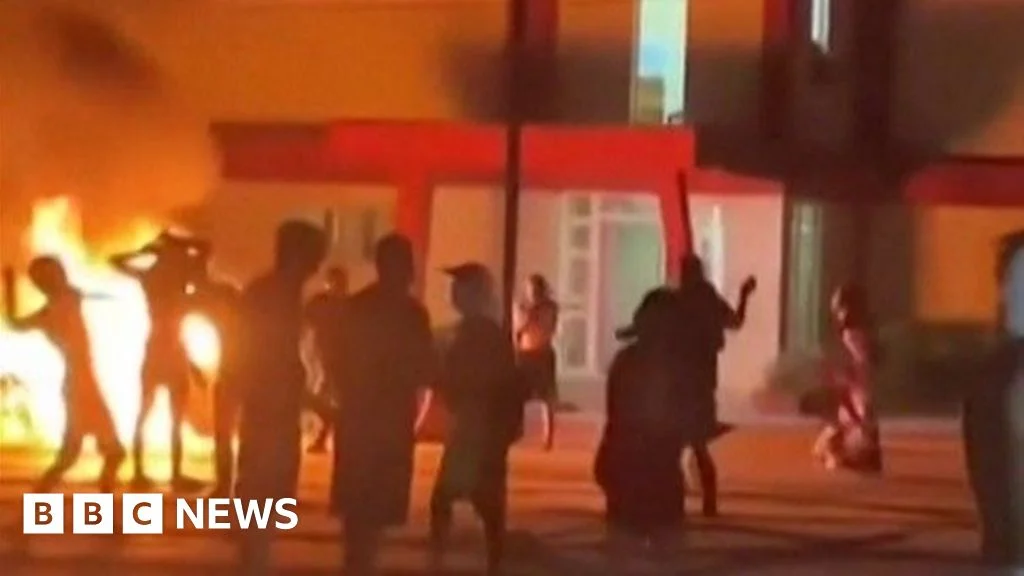
The protest in Morón, a city in the central province of Ciego de Ávila, began as a peaceful rally. Citizens gathered to voice their grievances over the increasingly unbearable conditions, particularly the high cost of food and the intermittent electricity supply. However, according to accounts from the state-run newspaper Invasor, the demonstration quickly escalated beyond its initial peaceful intentions. A smaller faction within the crowd reportedly engaged in "acts of vandalism," stoning the entrance to the local Communist Party building and igniting a fire in the street using furniture retrieved from the reception area. The report also indicated that other state-run facilities in the vicinity, including a pharmacy and a government-operated market, were similarly targeted.
Footage circulated on social media platforms, providing a rare glimpse into the unrest. The videos reportedly depicted individuals hurling rocks through windows while shouts of "liberty" echoed through the streets, as a substantial fire burned in the center of the thoroughfare. This visual evidence and the explicit calls for "liberty" underscore the depth of frustration and the political undertones of the protest, moving beyond mere economic grievances to a broader desire for change. The swift response from the Interior Ministry, with "specialised forces" deployed for investigation and arrests, highlights the government’s sensitivity to public displays of defiance, especially given the historical rarity of such open dissent in Cuba.
US Policy and the "Maximum Pressure" Campaign
The current economic plight in Cuba is inextricably linked to the "maximum pressure" campaign initiated by the United States administration, particularly under former President Donald Trump. While the US embargo has been in place for decades, the Trump administration significantly tightened restrictions that had been eased during the Obama era. The previous administration had seen a historic thaw in US-Cuba relations, including the re-establishment of diplomatic ties and some relaxation of travel and trade restrictions, offering a glimmer of hope for economic recovery and normalization. However, these advancements were largely reversed.
A cornerstone of the Trump administration’s strategy was its focus on isolating Cuba and exerting pressure for a change in its leadership, often linking Cuba’s fate to that of Venezuela. President Trump had made no secret of his desire for a shift in Cuba’s governance, publicly stating that Cuba was in "deep trouble" and threatening a "friendly takeover." His remarks, including a declaration that the one-party state would be "next" following the capture of its ally, Venezuelan President Nicolás Maduro, in January (referring to a perceived weakening of Maduro’s grip on power, not an actual capture), signaled a heightened state of confrontation.
Crucially, the US measures included blocking Venezuelan oil shipments to Cuba, which historically provided for approximately half of Cuba’s energy needs. This move, coupled with threats to impose tariffs on any country that sold oil to the island nation, effectively choked off a vital energy supply. This intensification of the blockade, layered atop the existing six-decade trade embargo, created an immediate and severe energy crisis, directly causing the widespread blackouts and fuel shortages that have plagued the country. The rationale behind these actions, from the US perspective, was to exert economic pressure on the Cuban government to abandon its socialist system and align with democratic principles. However, from Cuba’s standpoint, these measures represent an illegal and inhumane attempt to destabilize the country and punish its population.
Official Responses and Diplomatic Overtures
In the immediate aftermath of the Morón incident, the Cuban Interior Ministry acted swiftly, confirming the arrest of five individuals and stating that "specialised forces" were actively investigating the "acts of vandalism." The state-run media, including Invasor, carefully framed the narrative, emphasizing that the protest "initially began peacefully" before escalating, thereby distinguishing between legitimate grievances and disruptive behavior. This framing is typical of state responses to dissent, aiming to delegitimize the more extreme actions while acknowledging underlying issues to a certain degree.
Despite the internal unrest and the escalating rhetoric from the US, there were parallel diplomatic efforts underway. Hours before the Morón protest, the Cuban government in Havana confirmed that talks with the US were proceeding, aimed at "seeking solutions through dialogue" to the two countries’ persistent differences. This revelation underscores the complex and often contradictory nature of US-Cuba relations, where periods of intense pressure and public condemnation can coexist with quiet diplomatic engagements. Such dialogue, even amidst hostility, suggests an underlying recognition from both sides of the need for some form of communication, if not resolution, to their long-standing disagreements.
However, the efficacy of these talks in the face of ongoing US sanctions and the deepening economic crisis remains a significant question. For Cuba, dialogue is often seen as a way to alleviate the punitive effects of the embargo, while for the US, it may be viewed as an opportunity to push for internal reforms. The immediate impact of the Morón protest, coinciding with these diplomatic overtures, serves as a stark reminder of the domestic pressures on the Cuban government, even as it engages on the international stage.
Broader Implications and Future Outlook
The Morón protest, while relatively small in scale, carries significant implications for Cuba’s political and social landscape. Public dissent, particularly of a confrontational nature, is uncommon in Cuba, where freedom of assembly and expression are tightly controlled. While the country’s 2019 constitution theoretically grants citizens the right to demonstrate, a law defining the extent of that right has remained stalled in the legislature, effectively limiting its practical application. The rarity of such incidents makes them potent symbols of growing frustration and a potential harbinger of further unrest if economic conditions do not improve.
Havana, the capital, has emerged as another epicenter of recent discontent, experiencing blackouts that can last up to 15 hours a day. Last week, a group of students at the University of Havana gathered to protest the disruptions to their education, highlighting how the energy crisis is undermining even the foundational pillars of society. These scattered but persistent acts of protest suggest a weakening of the social contract that has historically underpinned the one-party state, where citizens have largely tolerated political restrictions in exchange for a degree of social welfare and stability. The current crisis threatens this delicate balance, eroding trust and fostering a sense of desperation among the populace.
The role of social media in disseminating information and potentially mobilizing dissent is also becoming increasingly evident. Footage from Morón, despite potential government efforts to control information, quickly found its way online, allowing both domestic and international audiences to witness the events. This digital connectivity presents a new challenge for the Cuban government, which has traditionally maintained a tight grip on media and public discourse.
Looking ahead, the implications are multifaceted. Domestically, the government faces immense pressure to find solutions to the economic crisis and alleviate the suffering of its citizens. Failure to do so risks further social unrest and challenges to its authority. Economically, the country desperately needs to secure reliable energy supplies, attract foreign investment, and implement reforms that can stimulate growth and improve living standards. The tourism sector, once a vital source of foreign currency, needs significant revitalization, though global travel restrictions and the ongoing economic woes present considerable hurdles.
Internationally, the dynamic between the US and Cuba remains pivotal. The ongoing dialogue, however tentative, could offer a pathway to de-escalation and a potential easing of sanctions, which would be crucial for Cuba’s recovery. However, a continuation of the "maximum pressure" approach risks further destabilizing the island and exacerbating a humanitarian crisis. The unfolding situation in Cuba is a complex interplay of internal economic pressures, external geopolitical forces, and the evolving dynamics of a population increasingly willing to voice its grievances, marking a critical period for the future of the island nation.