Climate Envoy and TotalEnergies Discuss Carbon Credit Framework to Accelerate LPG Cooking Across Africa
In a significant move to address one of Africa’s most persistent public health and environmental challenges, the country’s top climate envoy has entered formal discussions with TotalEnergies to leverage carbon credits for the expansion of Liquefied Petroleum Gas (LPG) cooking solutions. The discussions, held in early March 2026, signal a strategic pivot toward utilizing market-based mechanisms to bridge the financing gap for clean cooking infrastructure in Sub-Saharan Africa. This initiative seeks to replace traditional biomass—such as wood, charcoal, and animal dung—with LPG, a transition that proponents argue will save millions of lives and protect vast tracts of forest from degradation.

TotalEnergies, which has been aggressively expanding its footprint in the African energy sector, is positioning itself as a primary partner in this transition. The proposed framework would allow the energy major to generate carbon credits by documenting the emissions reductions achieved when households switch from carbon-intensive biomass to more efficient LPG stoves. These credits would then be sold on international voluntary or compliance markets, providing the necessary capital to subsidize the cost of stoves and fuel for low-income families who currently find LPG prohibitively expensive.
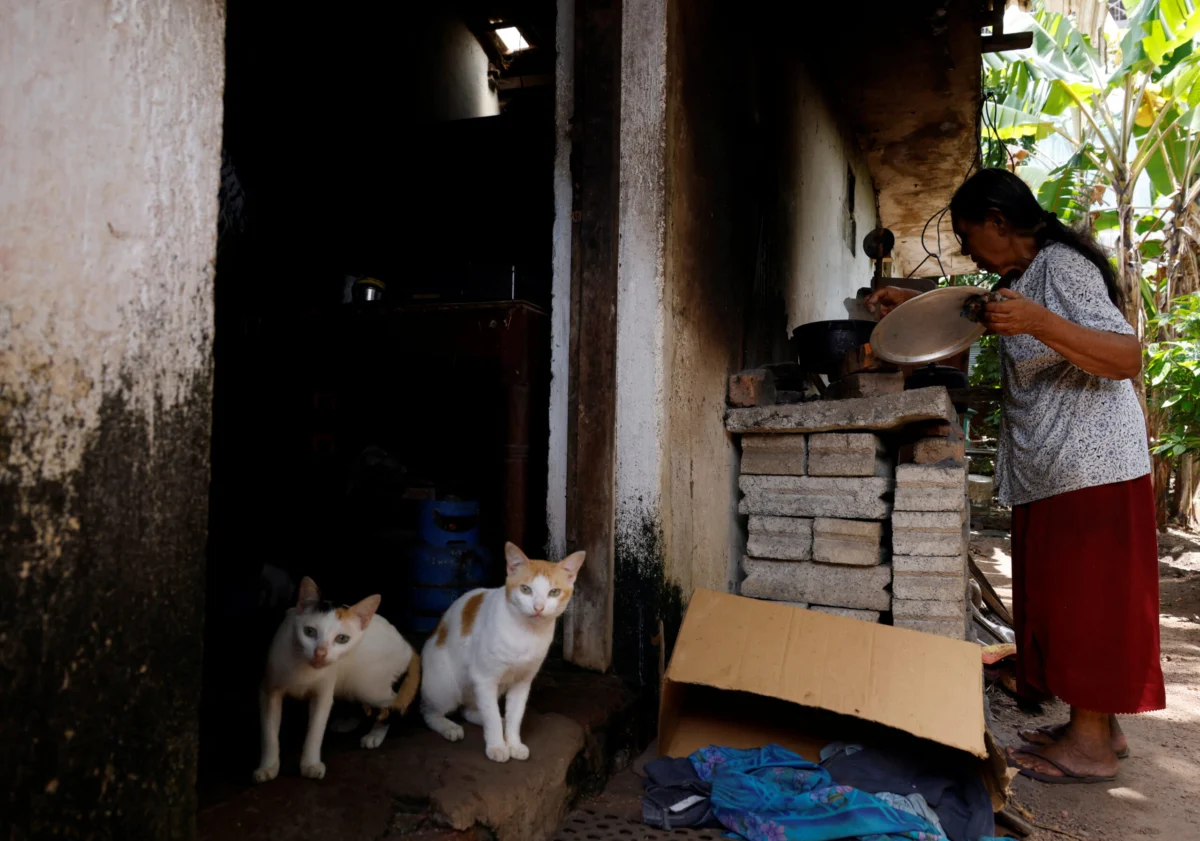
The Public Health Crisis: The Silent Killer in the Kitchen
The impetus for this partnership is rooted in a dire humanitarian crisis. According to data from the World Health Organization (WHO), approximately 2.3 billion people globally still lack access to clean cooking facilities. In Africa, the reliance on open fires and inefficient stoves is a leading cause of premature death, particularly among women and children. Indoor air pollution from cooking with solid fuels is linked to a range of non-communicable diseases, including stroke, ischaemic heart disease, chronic obstructive pulmonary disease (COPD), and lung cancer.

Medical experts note that the smoke produced by burning biomass contains high levels of particulate matter (PM2.5) and carbon monoxide, often exceeding WHO safety limits by a factor of 100 or more. The climate envoy emphasized during the talks that the transition to LPG is not merely an energy issue but a fundamental human rights and health priority. By reducing the time women spend gathering fuel—often several hours a day—the initiative also aims to unlock economic productivity and educational opportunities for millions.
The Environmental and Climate Imperative
Beyond health, the environmental toll of biomass cooking is staggering. The harvesting of wood for fuel is a primary driver of localized deforestation and land degradation across the African continent. This loss of canopy cover reduces the continent’s carbon sequestration capacity and exacerbates the effects of climate change, such as soil erosion and increased vulnerability to floods.

From a climate perspective, while LPG is a fossil fuel, its combustion is significantly more efficient and produces fewer greenhouse gas emissions per unit of energy than traditional wood fires. Furthermore, wood-burning stoves emit substantial amounts of black carbon, a short-lived climate pollutant that has a warming effect thousands of times stronger than carbon dioxide. A 2025 study by the International Energy Agency (IEA) suggested that a wholesale shift to LPG or electric cooking in Africa could reduce global CO2 equivalent emissions by nearly 1.5 gigatonnes annually by 2030.
A Chronology of Clean Cooking Initiatives (2024–2026)
The current discussions between the climate envoy and TotalEnergies are the culmination of several years of intensified international focus on clean cooking:

- May 2024: The Summit on Clean Cooking in Africa, held in Paris, saw world leaders and development banks pledge $2.2 billion toward achieving universal access to clean cooking by 2030.
- November 2024 (COP29): Negotiators made breakthroughs on Article 6 of the Paris Agreement, providing a clearer regulatory framework for how carbon credits from cookstove projects can be traded between countries.
- August 2025: TotalEnergies announced a $400 million investment over five years to develop LPG distribution hubs in East and West Africa, citing the need for "last-mile" infrastructure.
- January 2026: A coalition of African nations launched the "Clean Kitchen Initiative," calling for private sector partnerships to standardize carbon credit monitoring and verification.
- March 2026: The current high-level meeting takes place, focusing on the technical integration of carbon finance into TotalEnergies’ distribution model.
The Mechanics of Cookstove Carbon Credits
The partnership relies on a sophisticated "avoided emissions" model. For every household that adopts an LPG stove, a baseline of their previous biomass consumption is established. The difference in carbon emissions, including the "non-renewable biomass" fraction—which accounts for wood that is harvested faster than it can regrow—is calculated to determine the number of carbon credits generated.
However, the use of cookstove credits has faced scrutiny in recent years. Critics have pointed to "over-crediting" in previous voluntary market projects, where the actual emissions reductions were found to be lower than reported. To address this, the climate envoy and TotalEnergies discussed the implementation of digital monitoring, reporting, and verification (dMRV) technologies. This would involve using "smart" LPG meters that provide real-time data on fuel consumption, ensuring that credits are only issued for actual, verifiable usage.

TotalEnergies’ Strategic Role and Corporate Objectives
For TotalEnergies, the expansion into LPG cooking is part of a broader strategy to transition from a traditional oil and gas company to an "integrated energy company." While the firm continues to develop large-scale gas projects, such as those in Mozambique and Nigeria, the LPG initiative allows it to build a retail customer base while fulfilling Corporate Social Responsibility (CSR) goals and generating tradable environmental assets.
A spokesperson for TotalEnergies indicated that the company views Africa as the most critical market for LPG growth. "Our goal is to make clean cooking affordable," the spokesperson stated. "Carbon credits provide a mechanism to de-risk these investments and lower the price point for the end consumer, making LPG a viable alternative to charcoal."

Supporting Data: The Economics of the Transition
Economic data underscores the necessity of the carbon credit model. In many parts of rural Africa, the upfront cost of an LPG cylinder and stove can exceed $50, which is often more than a month’s income for the poorest households.
- Cost Gap: Current estimates suggest that without subsidies, LPG adoption remains below 15% in rural areas.
- Carbon Valuation: If carbon credits are priced at $25 to $30 per tonne—a level seen in early 2026 compliance markets—the revenue could cover up to 70% of the initial stove cost for a family.
- Health Savings: The World Bank estimates that for every dollar invested in clean cooking, there is a $15 return in the form of avoided healthcare costs and increased productivity.
Official Responses and Stakeholder Reactions
The reaction to the proposed framework has been cautiously optimistic. Environmental NGOs have praised the focus on health but expressed concerns about long-term fossil fuel lock-in.

"We recognize that LPG is a necessary bridge fuel for Africa," said a representative from a leading pan-African environmental group. "However, we must ensure that the infrastructure we build today can eventually be transitioned to renewable alternatives, such as bio-LPG or electric induction cooking powered by solar energy."
Meanwhile, the Paris Agreement watchdog—an oversight committee tasked with monitoring National Determined Contributions (NDCs)—has indicated it will closely review the deal. As noted in recent reports, the committee is already weighing action against countries missing their climate plans. Ensuring that cookstove credits are not used as "double counting" in national inventories will be a primary concern for international regulators.

Broader Impact and Global Implications
The success of the envoy’s discussions with TotalEnergies could serve as a blueprint for other developing regions, including Southeast Asia and Central America. If a major fossil fuel player can successfully integrate carbon finance into a public health initiative, it may encourage other multinational corporations to follow suit.
Furthermore, this development occurs against a backdrop of shifting energy dynamics. As China and Brazil join pledges to triple global nuclear energy capacity and the United States forms "critical minerals clubs" to secure clean tech supply chains, Africa’s focus remains on the immediate "energy poverty" crisis. The clean cooking initiative represents a pragmatic approach to the energy transition—one that prioritizes immediate human welfare alongside long-term decarbonization goals.

Challenges and Implementation Risks
Despite the momentum, several hurdles remain. The logistical challenge of distributing LPG to remote, landlocked regions is immense. TotalEnergies will need to invest heavily in storage terminals, bottling plants, and a vast network of small-scale retailers. Additionally, the volatile price of international gas could threaten the affordability of LPG, even with carbon subsidies.
There is also the risk of market saturation or credit devaluation. If too many cookstove projects enter the market without rigorous standards, the price of carbon credits could collapse, stripping the initiative of its funding. The climate envoy noted that "transparency and integrity" would be the cornerstones of the framework being developed with TotalEnergies.

Conclusion: A New Frontier in Climate Finance
As the negotiations continue into the second quarter of 2026, the eyes of the international community are on this partnership. It represents a test case for whether the private sector and national governments can collaborate effectively using the tools of the Paris Agreement to solve a localized crisis.
The climate envoy’s push for LPG through carbon credits is a recognition that traditional aid and government spending alone cannot solve the clean cooking deficit. By tapping into global carbon markets, the initiative seeks to turn a liability—Africa’s energy poverty—into an opportunity for sustainable development. If successful, the smoke-filled kitchens of the past may soon give way to a cleaner, healthier, and more prosperous future for millions of Africans.

Related Posts
Climate Envoy and TotalEnergies Discuss Carbon Credits to Scale LPG Cookstoves Across Africa
Iran war effect on oil and gas prices shows renewables are the path to energy security